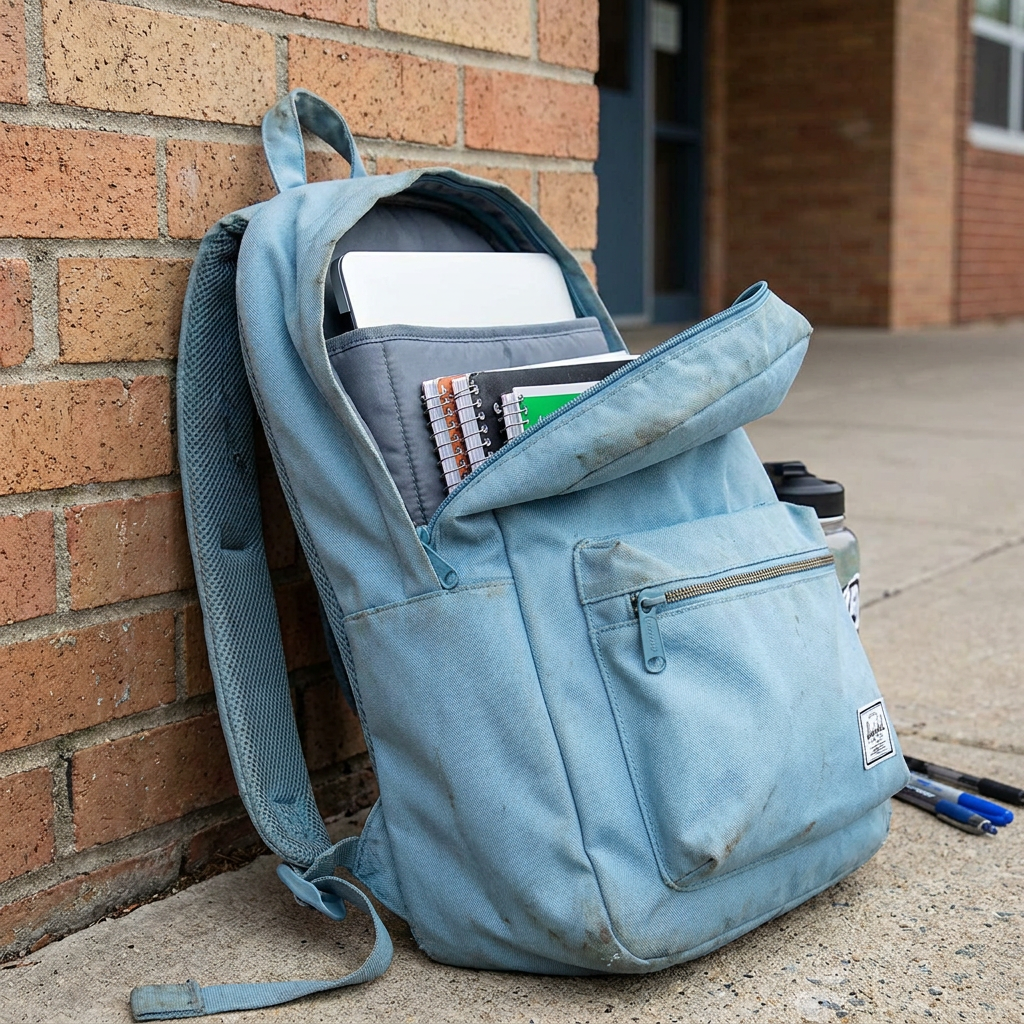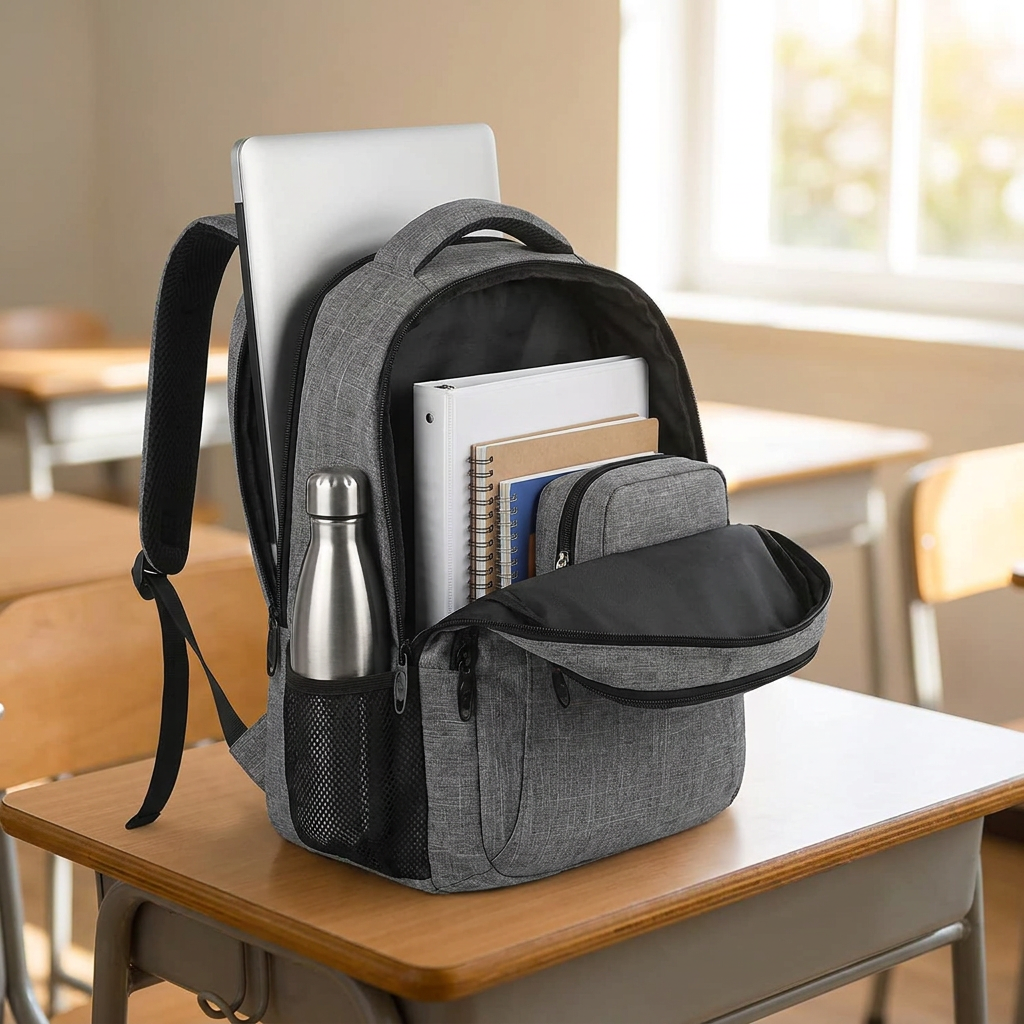
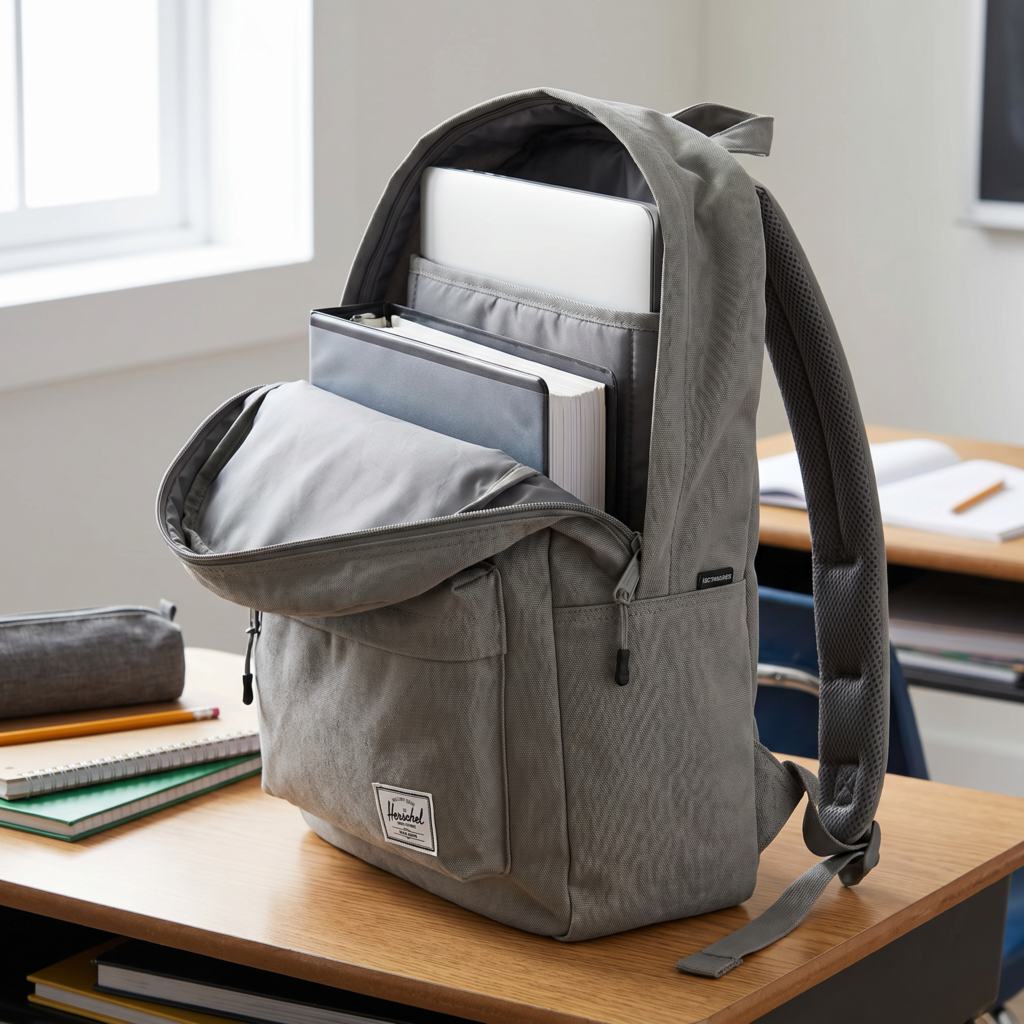
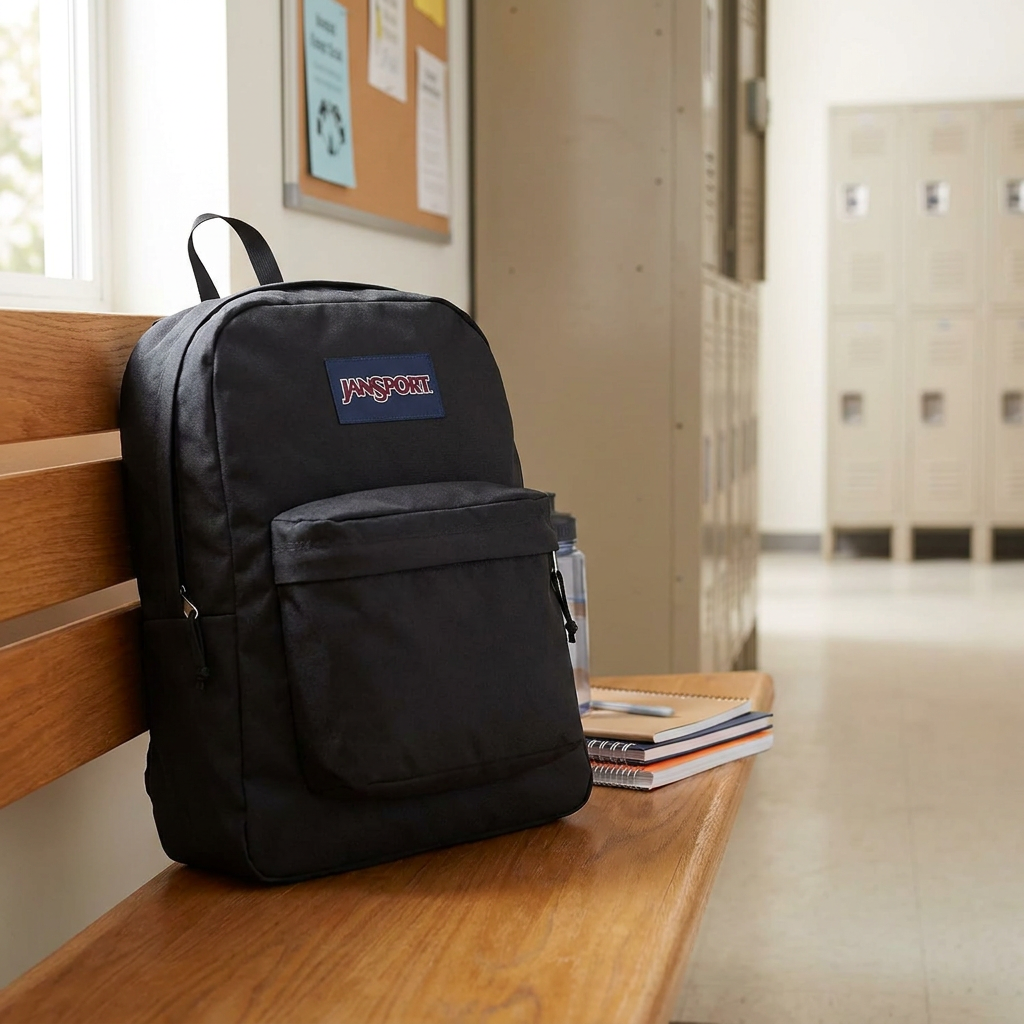
JanSport SuperBreak One is a simple, light one-compartment backpack for low-to-moderate school loads, but it’s not ideal for heavy daily laptop carry.
It gets attention for one reason: it’s uncomplicated. One main compartment, one front pocket, and a shape that slips into most school routines without fuss. That simplicity can be a strength, or a limit, depending on how much structure a student needs.
- Choose it for paper-heavy days and lighter carry, where a single big cavity is an advantage.
- Skip it for daily laptop carry or multi-class organization that relies on true separation.
- Expect durability to hinge on zippers and fabric weight, not on padding or internal protection.
What “school best backpacks” means in practice
Most searches for school best backpacks aren’t really about a “best” list. They’re about avoiding a bad fit: straps that dig in, zippers that pop, a bag that won’t take a binder, or a laptop that rides unprotected. The right baseline is load, not brand.
JanSport SuperBreak One sits in the classic-school category. It’s built around a single large compartment and a front utility pocket with an organizer. That design tends to work when the day is mostly notebooks, a folder or two, pencil case items, and a lunch bag that can be squeezed in.
It’s less convincing when the carry shifts. A heavy textbook stack, a full-size lunch box, a gym change, and a laptop all at once can turn “simple” into “messy.” That’s not a defect. It’s the predictable outcome of one-compartment geometry.
For context, more structured everyday school packs like JanSport Cool Backpack or laptop-centered options like The North Face Vault and The North Face Women’s Jester exist for a different load profile. Those models aren’t automatically better. They’re solving a different problem.
JanSport SuperBreak One: the core idea and what it’s not
JanSport SuperBreak One is a traditional bookbag. It prioritizes a clean interior volume over built-in separation. That gives it a familiar “dump-and-go” feel, which many students prefer because it’s fast at the locker and fast on the bus.
That same layout sets expectations. Protection for electronics is limited because this model doesn’t center its design on a dedicated padded laptop sleeve. Anyone searching for a best high school backpack with daily device carry should treat that as a deciding constraint, not a minor detail.
Organization lives mostly in the front utility pocket. The built-in organizer helps with small items, but it doesn’t replace true internal dividers. Loose chargers, earbuds, and keys still need a pouch if they’re expected to stay put.
One more practical note: a single large cavity can actually be kinder to odd-shaped loads. Thick art sketchbooks, a hoodie, or a bulky pencil case fit more easily when there aren’t rigid partitions fighting the shape.
To verify the exact version and color options being discussed, the product page for JanSport SuperBreak One Backpack is the cleanest reference point. Retail listings sometimes blur similar JanSport names.
Fit, comfort, and campus handling: where this backpack feels right
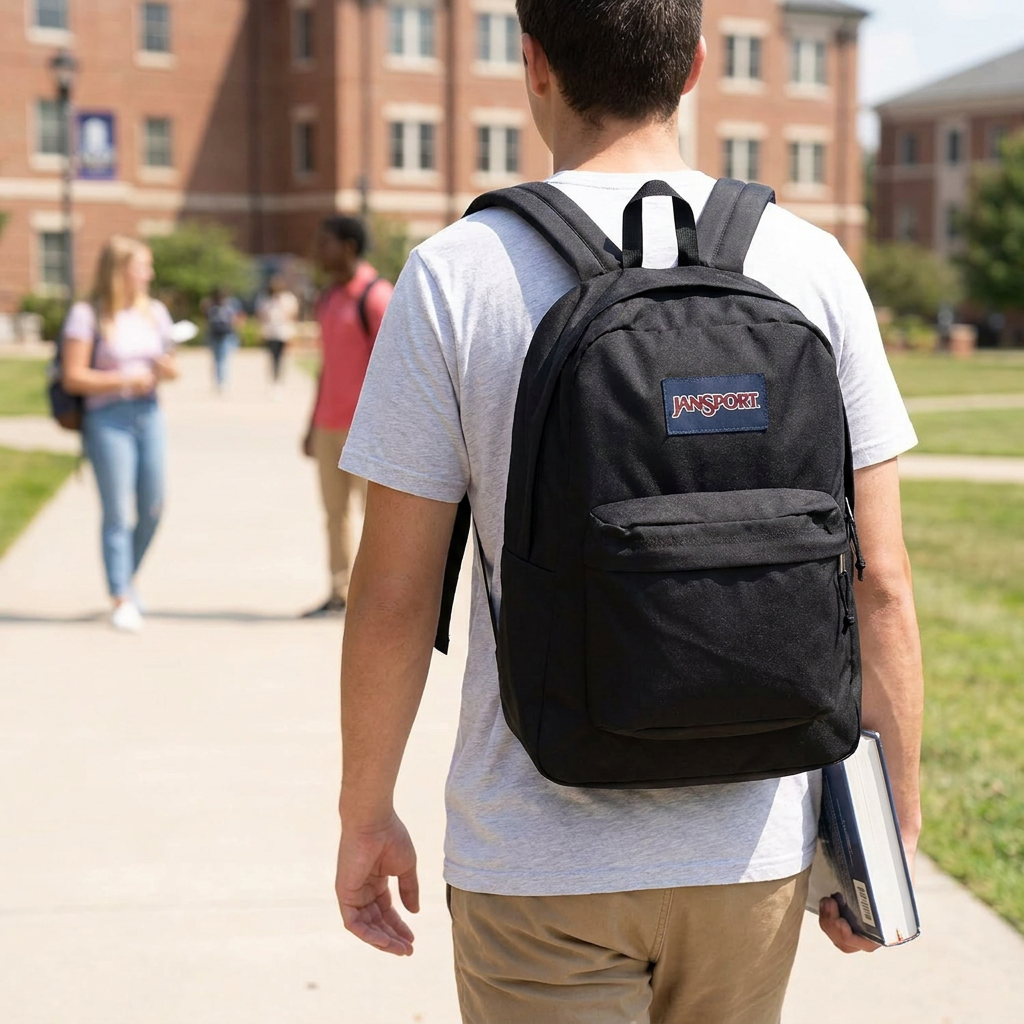
Comfort starts with strap geometry and how the load sits against the back. A simpler pack like this can carry surprisingly well when the contents are flat and packed close, because there’s less structure pushing weight away from the body.
But there’s a ceiling. When the bag gets dense and heavy, padding and a supportive back panel matter more. That’s where many “best school backpacks 2025” roundups quietly separate minimalist bags from daily-laptop models. A laptop, a full water bottle, and thick books create point loads that thin padding doesn’t hide.
Locker and hallway handling is a real advantage here. The profile is straightforward. It tends not to snag on locker hooks or stick out awkwardly in crowded hallways. For middle school and early high school, that everyday ease can matter more than having five compartments.
Two quick fit checks help avoid regret:
- Straps should keep the bottom of the bag above the hips. Low-hanging bags feel heavier fast.
- Heavier items should sit closest to the back panel. It reduces shoulder pull and sway.
Students who want a more “set” carry, with a clearer laptop home and more separation, often end up happier with a structured alternative like The North Face Vault. That’s a different feel on the back.
Organization and durability signals to judge early
With a one-compartment backpack, small frustrations show up early. Papers crease because they float. Pens migrate. A calculator ends up under a hoodie. Some students don’t care. Others hate it by week two.
Before treating it as a long-term “best kids school backpack” candidate, it helps to be honest about habits. If the student already uses pouches and folders, the single cavity stays controlled. If everything gets tossed in loose, the day becomes a rummage.
Durability is also easier to read on this style of bag. There are fewer moving parts. The main watch points are the zipper track, the zipper pull, and how the fabric handles abrasion from bus floors and hallway corners. Those are the real failure modes on many school bags.
Two contextual comparisons clarify the positioning without turning this into a catalog. JanSport Cool Backpack adds a more school-and-laptop oriented layout, including a 15-inch laptop sleeve, and it’s built for students who carry a device most days. And for students who want a more supportive carry style with a laptop sleeve and a more “commuter” structure, The North Face Women’s Jester is a common cross-shop.
SuperBreak One stays compelling when expectations match the design. Light-to-moderate school loads, quick access, simple routine. That’s the lane.
Capacity and real-world load: when one compartment becomes a limit
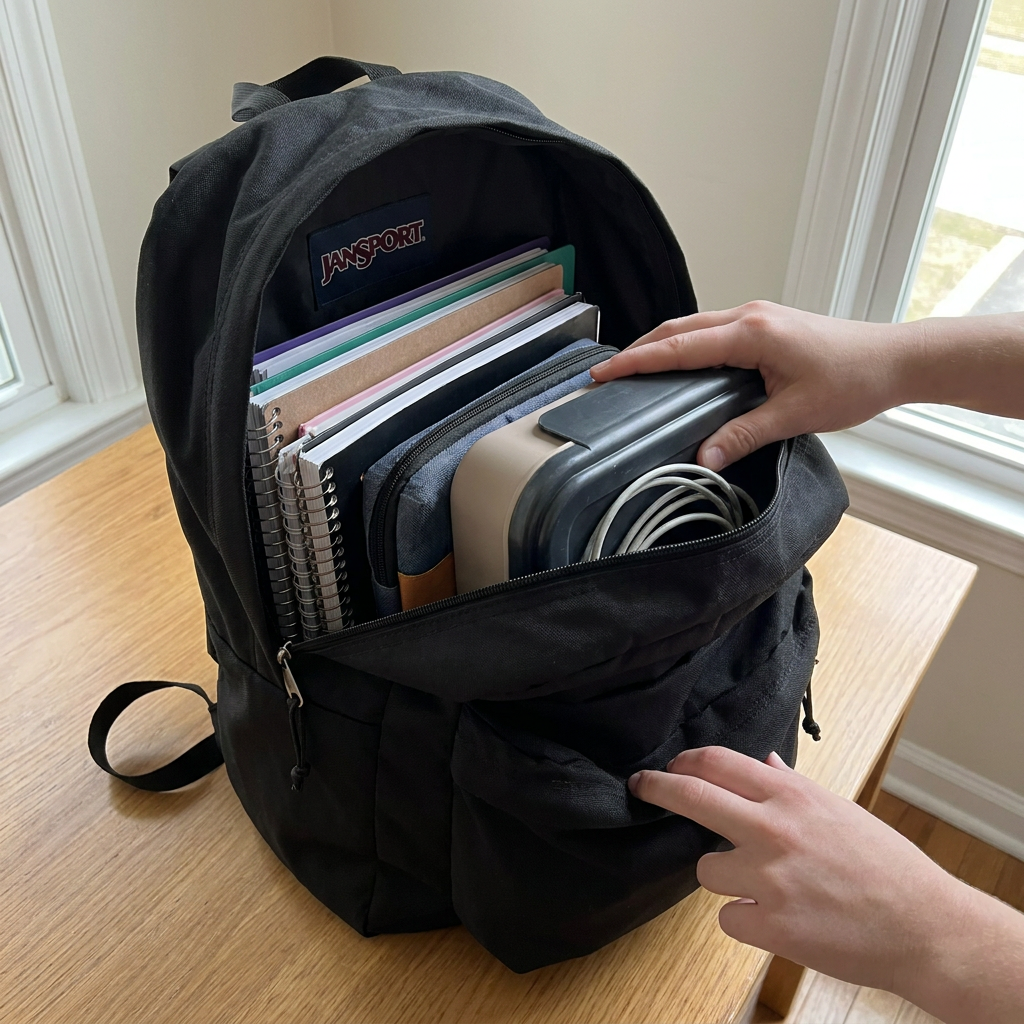
JanSport SuperBreak One holds up well as long as the load stays “flat”: notebooks, folders, and a pencil case. Once rigid and bulky items enter the mix, the single-cavity geometry starts to demand trade-offs—not because of poor quality, but because of physics.
Three numbers help frame school use without being led by brand alone: 18–22 liters for light days (notebooks and a basic lunch), 24–28 liters for mixed days (more books plus a hoodie), and 30–35 liters when you consistently need space for gym gear or library hauls. SuperBreak One tends to feel most natural in the first and second ranges; in the third, the lack of internal structure matters more.
The point isn’t only “how much fits,” but how it fits. A 2-inch binder, a rigid lunch container, and a full water bottle create edges and dead space. In a backpack with dividers, that dead space becomes functional pockets. In a one-compartment bag, it becomes clutter and pressure on the fabric.
In practice, it behaves best when the load stays close to the back panel and doesn’t “push” outward. You notice the difference immediately in the hallway: less sway, less of that backward-pull feeling.
- Days with fewer classroom changes: the open volume helps because you can load and unload quickly without dividers getting in the way.
- Days with fragile items: a tablet or laptop without a case takes the hit, because pressure comes from books and hard edges.
- Days with sports gear: shoes and clothing create a “block” that crushes notebooks and corners.
People searching “best school backpacks 2025” often land on more structured models for exactly this phase: when the weekly load varies, structure becomes a form of order, not a luxury.
Laptop and tablet protection: a safety criterion, not just convenience
If the backpack needs to carry a device every day, the question isn’t “is there a pocket,” but “is there a barrier.” In a model like SuperBreak One, a laptop tends to share space with books and rigid items. The typical result is compression on the screen and corners, especially when the bag is set down hard or shoved into a locker.
For high school and college students, a true padded sleeve changes the risk threshold. Alternatives like The North Face Vault and The North Face Women’s Jester put the laptop at the center of the design. It’s not only organization—it’s reducing impacts and flex.
An external reference helps because it’s not about a brand, but safety. The National Safety Council covers backpack safety and also cites the American Academy of Pediatrics’ weight guidance: Backpack Safety (National Safety Council).
In a “best backpack for nursing school” or “best backpacks for medical school” context, the point becomes even more concrete. The load often includes heavy textbooks and a laptop, and the day runs long. In that case, SuperBreak One can work only if the device rides in a rigid case and the rest of the contents stay compact.
A quick check before treating it as a “safe” device choice:
- The laptop can fit in a case with reinforced edges without bending or forcing the zipper.
- The heaviest books stay against the back panel, not in front of the device.
- The water bottle doesn’t ride loose in the main compartment, where it can hit electronics.
If any of those three points don’t hold, a model with a dedicated padded sleeve usually reduces problems over time, even without adding much total volume.
What to expect between weeks 2 and 8: the real wear that decides whether it lasts
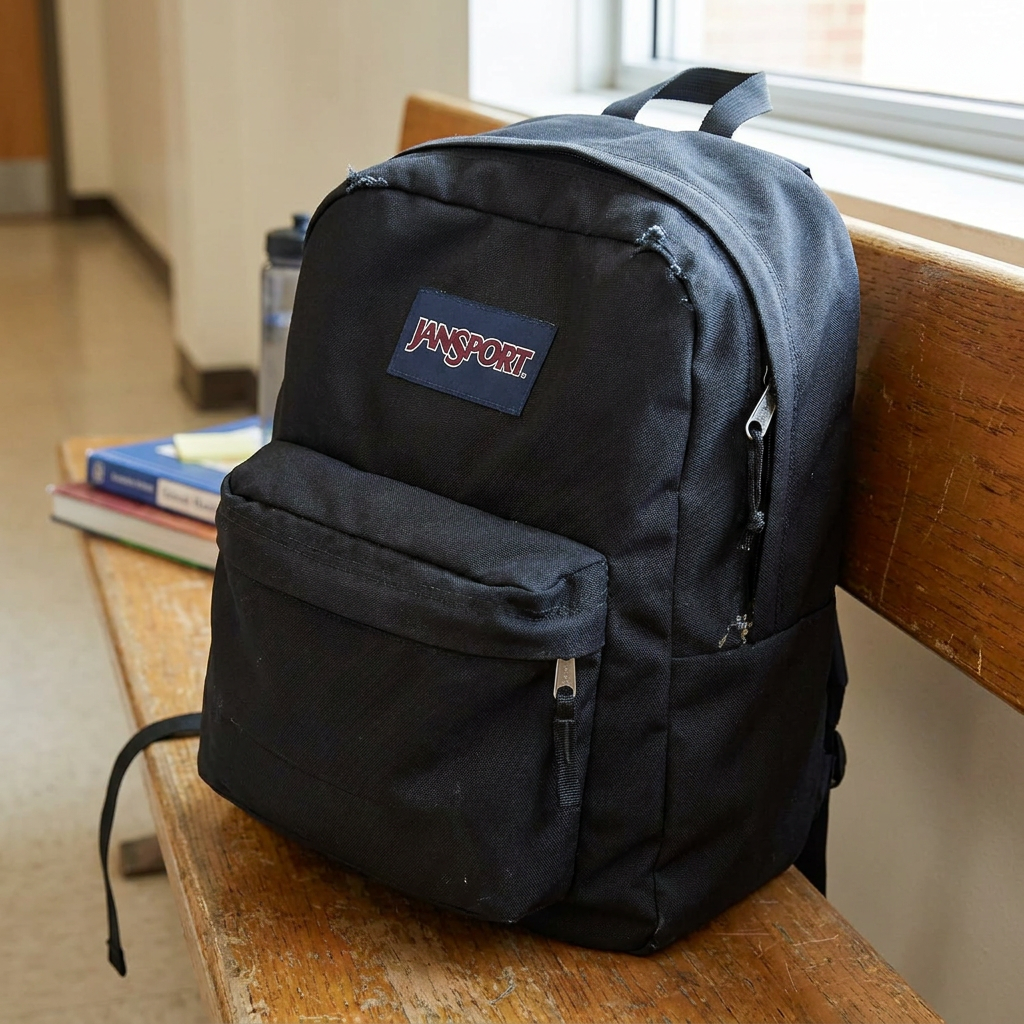
Many backpacks look perfect on day one. The differences show up later. Between week two and week eight, school use highlights two areas: zippers and stress points (shoulder-strap anchors and the top handle).
In this window, you also see another common minimalist-bag behavior: the interior “adapts” to how it’s loaded. If items are always shoved in quickly, the lining and seams take repeated stress in the same spots. If a rigid folder or internal organizer is used, stress spreads out more evenly.
The advantage of SuperBreak One is that it has few elements that can break. The downside is that every remaining element works harder. The main zipper is a clear example: if it’s forced when the load exceeds usable volume, there’s no second access route or “relief” compartment.
A practical read, without turning the purchase into a technical inspection:
- Zipper glide: it should stay smooth even when full. If it grinds, it’s often already twisting under load.
- Stitching at strap anchors: if it starts to pucker early, the load is pulling too low or too far back.
- Bottom panel: abrasion from bus floors and repeated set-downs tells you more than the print or color.
Students using a backpack in “tougher” environments (rough floors, long walks, daily public transit) often see more value in options with a more structured back panel, like The North Face Vault. You don’t need a price comparison here—you need to match the day-to-day.
When it makes sense to move to a more structured alternative (without turning it into a contest)
SuperBreak One fits a simple idea of school. When use changes, the criteria change too. At that point, it’s rational to look elsewhere—not to “level up,” but to match the backpack to a different load.
To make the decision clearer, a scenario table helps more than a spec list.
| Scenario real | Option that tends to work better | Why the experience changes |
|---|---|---|
| Notebooks and folders, few small items | JanSport SuperBreak One | Open volume, quick access, less internal rigidity |
| Daily laptop and long commutes | The North Face Vault | “Commuter” structure and better load management close to the back |
| More separation, but you want to stay with JanSport | JanSport Cool Backpack | Dual compartments and a 15-inch laptop sleeve to reduce internal chaos |
| Mixed days, polished look, and more support | The North Face Women’s Jester | More guided organization and a more stable feel while moving |
In search language, “best north face backpack for high school” often means “I want a safer laptop carry and a backpack that doesn’t collapse when it’s full.” In that case, Vault or Jester are coherent alternatives. When the priority is lightness and simplicity, SuperBreak One stays on target.
For anyone who wants to verify details and variants of the more structured models mentioned, product pages are more reliable than short retailer blurbs: JanSport Cool Backpack, The North Face Women’s Jester, The North Face Vault.
One last detail that often gets missed: for long walks or big campuses, the difference between “it sits on your shoulders” and “it sits well” only shows up when the week is full. That’s where structure and padding become part of daily school performance, not an extra.
Where you really win or lose: school routine, habits, and daily friction
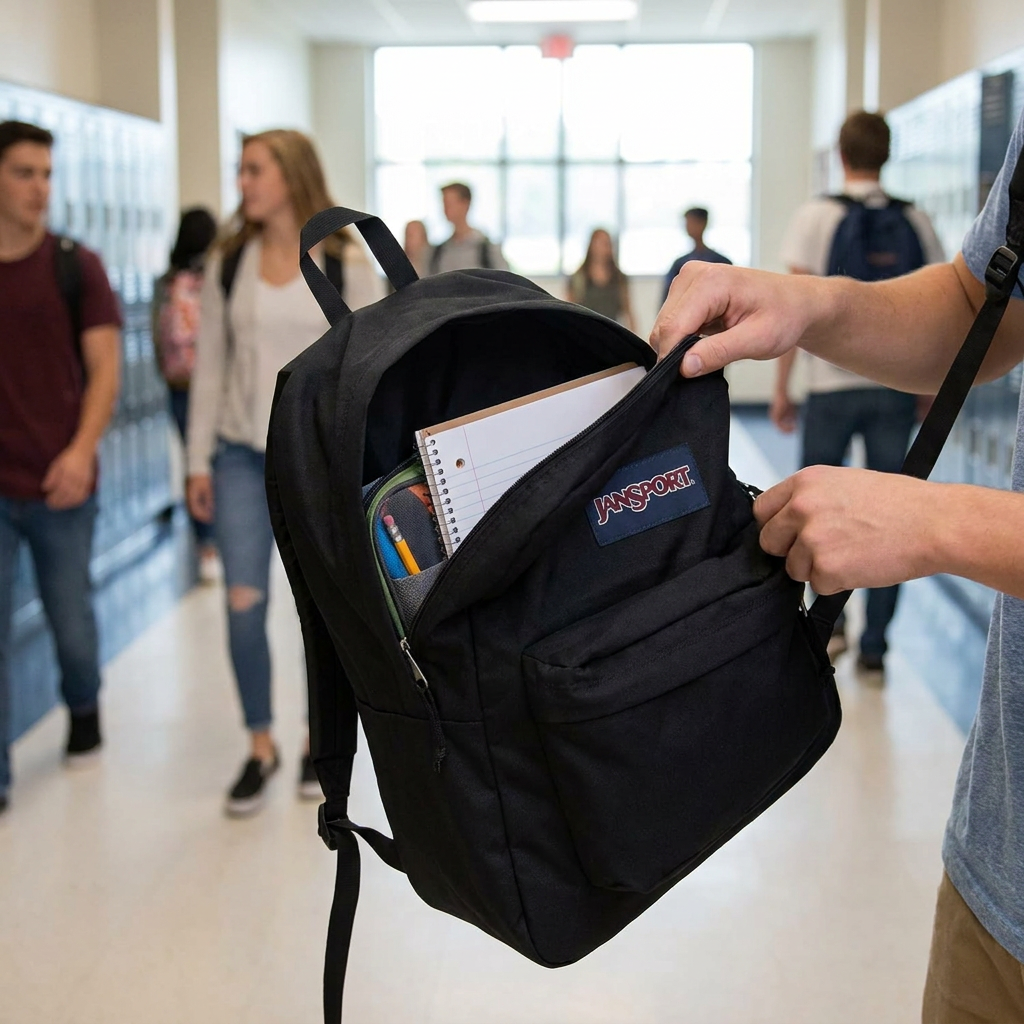
With an essential backpack like JanSport SuperBreak One, the difference between “it’s fine” and “I hate it” rarely comes down to a spec sheet. It comes down to how the day is lived. Someone who opens the bag 20 times between locker, bus, and hallway tends to like the speed. Someone who needs a fixed home for every item gets tired of it fast.
A practical signal is paper management. If materials ride in a rigid folder or binder, the single compartment stays tidy without thinking. If papers go in loose, order becomes extra work—and the backpack doesn’t “help” you restore it.
Another often-overlooked point: the water bottle. When there isn’t a truly reliable external pocket, the bottle ends up inside. It’s convenient, but it raises the risk of bumps and leaks near notebooks and devices. For people searching school best backpacks to reduce these hassles, that’s a real difference, not a detail.
A note on style and social context. In middle school and early high school, a classic, “neutral” backpack can reduce attention on brands and trends. That’s not a benefit for everyone. For some students, it is.
Clear editorial stance: if the goal is a simple companion for predictable days, SuperBreak One hits the mark. If the week is variable and heavy, the minimalist design stops being a plus.
When this backpack truly makes sense (and when it doesn’t)
JanSport SuperBreak One works well for students with light-to-medium loads and tidy habits: notebooks, folders, pencil case, basic lunch. It also suits anyone who wants a backpack that’s easy to handle between locker and bus, without lots of pockets to manage, and anyone who prefers a classic line over a “commuter” structure.
It’s a poor fit when laptop carry is daily and you don’t want to rely on extra sleeves, or when you need real separation between books, a rigid lunch, accessories, and small items. It’s also not the right option for anyone who fills the bag to the limit every day: in that case, the lack of internal structure makes stress more obvious—and more annoying.
Common questions about “school best backpacks” and JanSport SuperBreak One
Does “school best backpacks” mean JanSport SuperBreak One fits everyone?
No. “School best backpacks” is a search label, not a guarantee. JanSport SuperBreak One fits a simple routine and non-extreme loads, but it isn’t built for advanced organization or dedicated laptop protection.
Can it work as a best high school backpack if there’s a laptop almost every day?
It can work only with realistic expectations. If a laptop rides often, a model with a dedicated padded sleeve reduces compromises and load-management mistakes. You’ll feel the difference within a few weeks.
Why are some The North Face models mentioned when people search school best backpacks?
Because many students want a more stable carry and a more defined home for devices. The North Face Vault and The North Face Women’s Jester are often cross-shopped for that kind of day, not because they’re automatically superior.
Does it make sense to consider JanSport Cool Backpack instead of SuperBreak One?
Yes—when you need more internal separation and clearer laptop management without switching brands. JanSport Cool Backpack keeps a school-first layout but shifts the experience toward order and compartments. If you hate rummaging, it’s a meaningful change.
Is it a credible choice for best backpacks for law school or heavy college programs?
Only in lighter scenarios or when everything is “contained” with sleeves and organizers. In contexts like best backpack for nursing school or best backpacks for medical school, loads are often denser and days longer. In that case, simplicity can become an operational limit.
Verdict and typical use
JanSport SuperBreak One is a sensible pick in the “school best backpacks” universe when the priority is simplicity, perceived lightness, and quick handling—accepting less protection and less structure.
A clear use case: a middle school or high school student with fairly predictable days who carries mostly notebooks and folders and wants a backpack that doesn’t complicate the routine. In that context, SuperBreak One tends to stay pleasant even after the initial excitement phase.