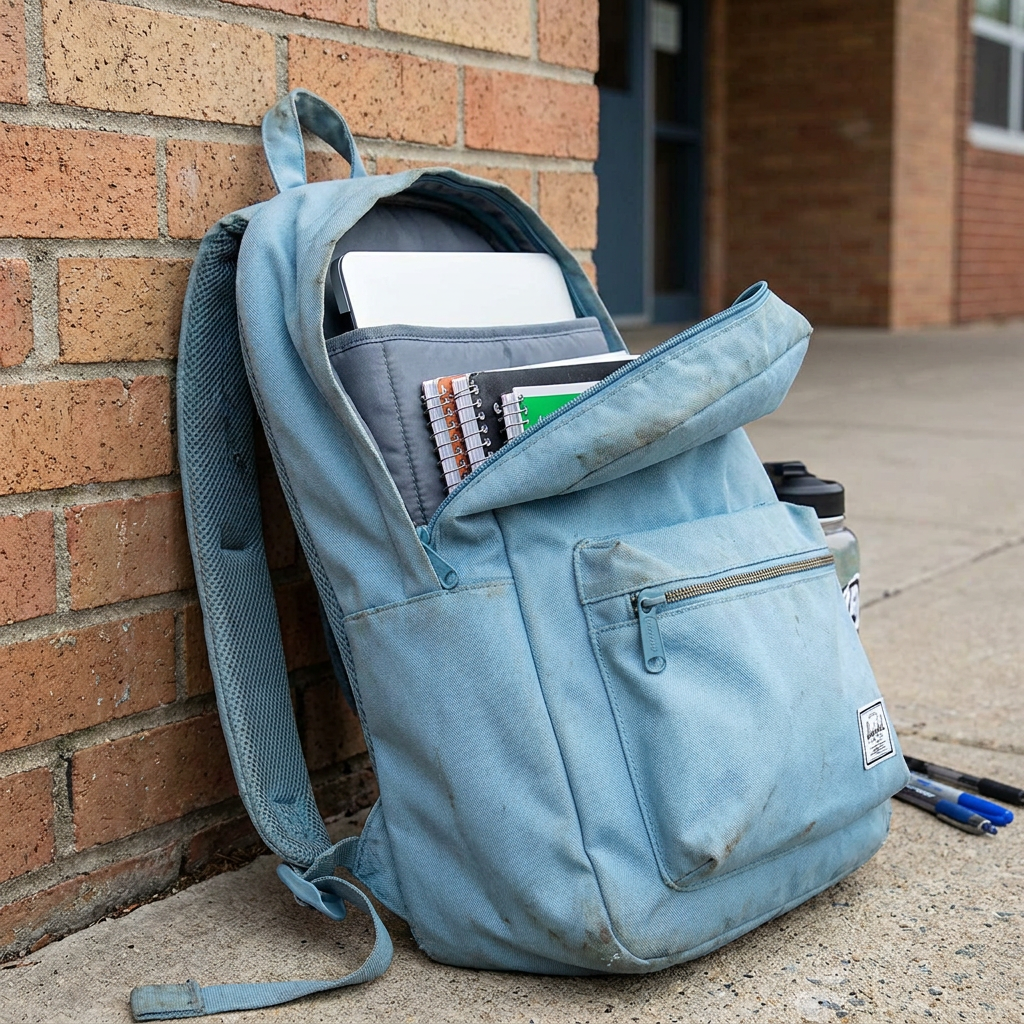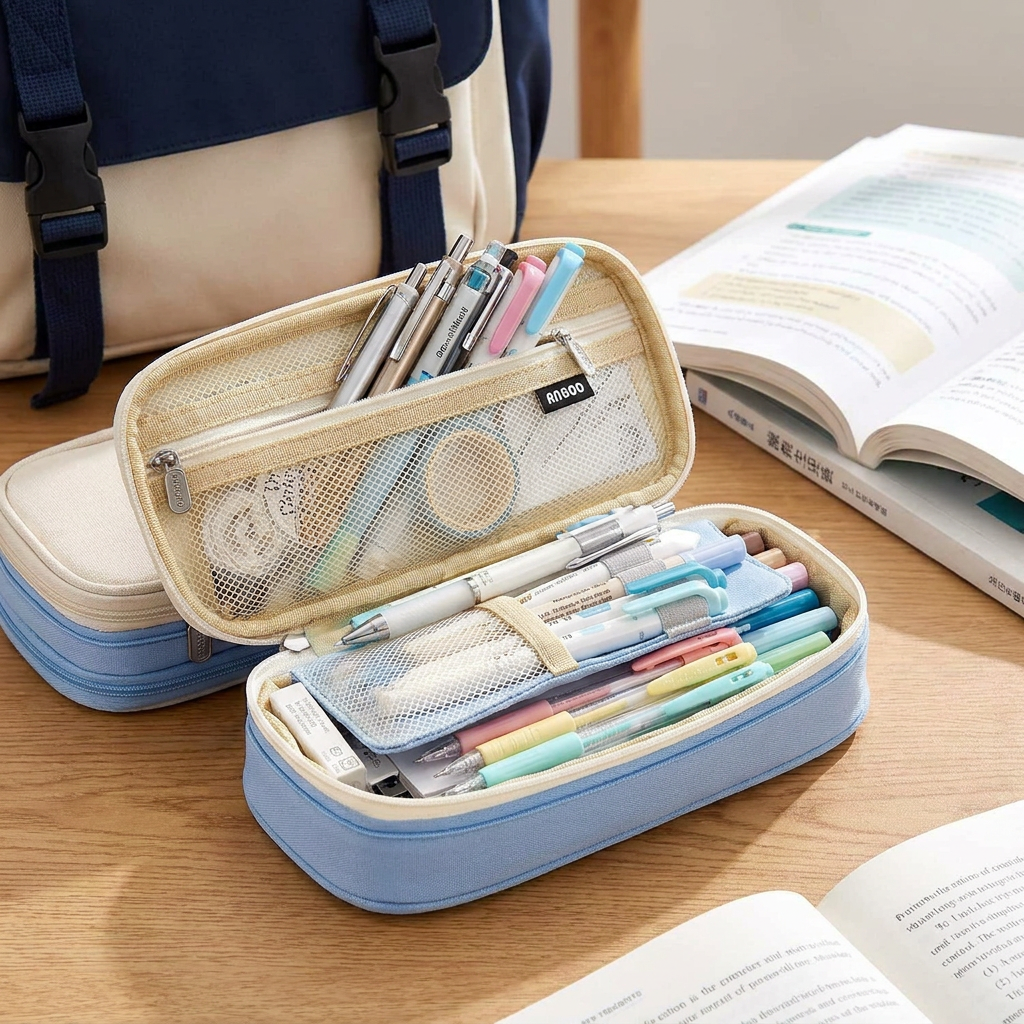
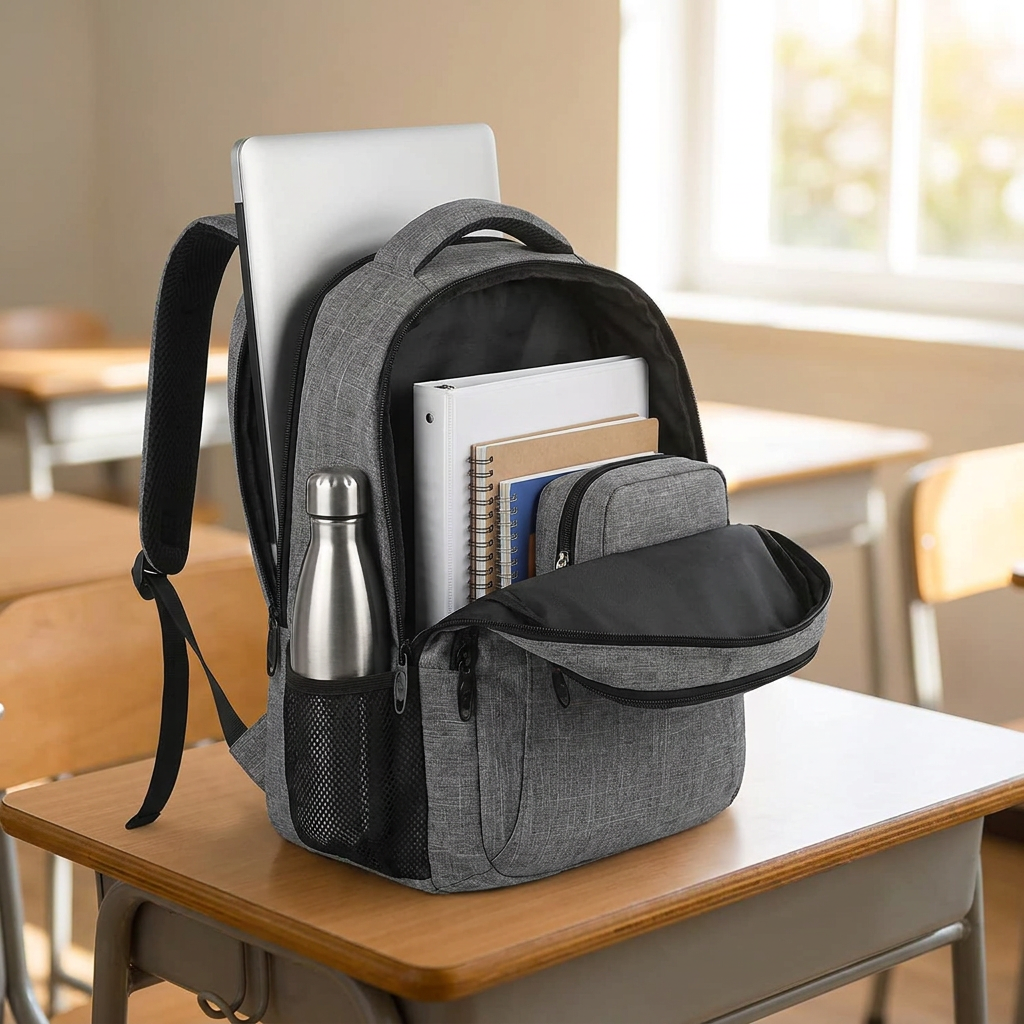
The best backpack for middle school is typically a 20–30L pack with comfy straps, bottle pockets, and a secure 13–15. 6″ laptop sleeve.
For middle school, the difference isn’t a "trendy" detail—it’s the combination of real capacity, comfort when the bag is full, and organization that survives fast days: class changes, tight lockers, required devices, and sports after school. A good-looking backpack that gives up after a couple of months, or one that starts hurting shoulders once books and a laptop go in, stops being a good deal quickly.
- Measure the load: if it’s often heavy, you’ll want more structured shoulder straps and a more stable back panel.
- Check compatibility: a "fits 15.6 inch" sleeve doesn’t automatically mean good protection—padding and placement matter.
- Think durability: stitching at stress points and smooth, sturdy zippers matter more than extra "bonus" compartments.
Which “best backpack for middle school” makes the most sense
It makes the most sense to choose a backpack that stays comfortable when loaded, fits into a locker without a fight, and carries a laptop or Chromebook without forcing you to add a separate case. In practice: a medium capacity (often 20–30 liters), two compartments or one well-managed main compartment, at least one external water bottle pocket, and shoulder straps that don’t collapse. The usual trade-off is between a slimmer profile (easier in crowded hallways) and more volume (easier for students carrying lots of books or sports gear).
When the day involves lots of moving and little time between classes, simple organization is a real advantage. Too many tiny pockets slow students down and often steal usable space from the main compartment. On the other hand, one huge unstructured compartment tends to mean crushed items, tangled cables, and a device that shifts around.
A practical note on weight: many kids can handle a medium backpack, but if school requires heavy paper textbooks plus a computer, comfort isn’t an "extra." In that case, a back panel that helps distribute weight and wider straps with decent padding matter. If the backpack slides low and pulls on the shoulders, the size or structure isn’t right.
Why middle school is a special case (and where many backpacks fail)
Middle school combines two things that don’t always play nicely together: "big kid" loads and bodies that are still growing. With the same stated liters, one backpack can feel awkward if it’s tall and narrow (it can throw balance off), while another feels easier if it’s more compact but deeper. That’s not just aesthetics: in crowded hallways and at lockers, thickness matters as much as capacity.
There are also very concrete constraints that get overlooked when people search for best middle school backpacks:
- Lockers and hooks: you want a top handle that doesn’t feel flimsy and fits well on a hook; without a stable grab point, bags slip, fall, and wear out faster.
- Fast passing periods: zippers that snag or catch on lining become a daily problem, not a minor flaw.
- Required devices: a sleeve only helps if it holds the computer in place and keeps it away from the bottom; if the base is soft, impacts transfer to the device.
- Water and mess: wet floors, spilled drinks, sudden rain— a reinforced base and a fabric that doesn’t soak immediately often matter more than vague "waterproof" promises.
A common misconception: a "high school" backpack isn’t automatically the best backpack high school, and it’s not automatically right for middle school either. Many are taller, built around larger laptops and a more linear routine (home–school). Middle school days are more fragmented, and the backpack has to tolerate quick drops and bumps without turning into a shapeless sack.
Selection criteria that actually matter: size, comfort, organization, durability
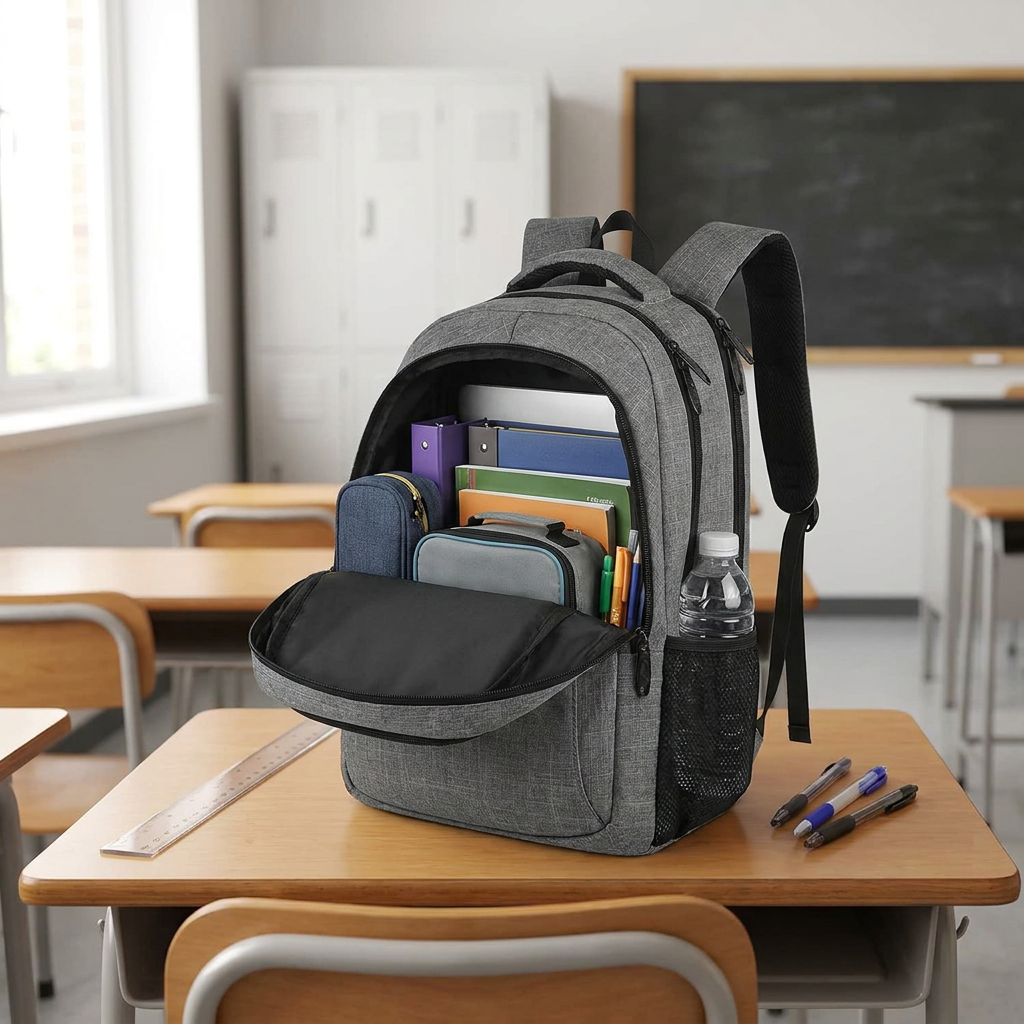
Before looking at brand and style, it helps to lock in four criteria. These are what separate a backpack that looks fine on a shelf from one that works as a best backpacks for middle school option in real life.
1) Size and capacity (without getting tricked by liters)
When you don’t have official measurements in front of you, the useful rule is to look at the real use: for most students, the "middle" range avoids both the "tiny" look and the "suitcase" look. In practical terms, 20–30 liters often covers a standard school day; above that you’re getting into "heavy hauler" territory (useful, but bulkier). If a student also carries sports gear, they may need more volume or an external carry option (bungee cords/straps) to hold a hoodie or jacket without crushing everything inside.
2) Comfort and fit (more adjustment, less pain)
Comfort isn’t just padding. It’s how the backpack sits on the back and where the weight ends up. Practical signs to look for:
- Contoured straps: they can reduce rubbing near the neck and pressure near the underarms.
- A back panel with some structure: if it folds in half when lifted, the load tends to pull backward.
- Adjusters that move smoothly: if buckles stick or slip, nobody will use them and the backpack will stay "wrong."
A parent-friendly reference point: if the backpack hangs far below the hips, it’s often too long or worn with straps too loose. If it rides high and pushes into the neck, the size or adjustment isn’t right. Fixing strap length can change comfort more than adding another pocket.
3) Organization that speeds up the day
In middle school, a simple layout often works best: one roomy main compartment, a second compartment for notebooks or a device, and a front pocket for small items. The goal isn’t "lots of pockets," it’s knowing where things go without dumping the bag on a desk. A tablet/laptop sleeve helps only if it’s padded and positioned toward the back panel (weight closer to the back is easier to carry).
4) Durability: what to check before you buy
Durability isn’t a slogan. You can often predict it from visible details—usually the same places backpacks actually fail:
- Zippers: they should open and close smoothly; a zipper that already catches fabric tends to get worse.
- Shoulder strap anchors: look for dense stitching and reinforcement; a single line of stitching can be a weak point.
- Base: a tougher bottom reduces abrasion and tearing when the bag gets dropped or dragged.
- Interior lining: very thin lining can tear and then take nearby stitching and zipper areas with it.
People searching best backpack for middle school boy or best backpacks for middle school girls often start with style. That’s normal. But when the look is similar, the real difference is in these elements: comfort when full, reliable zippers, and structure that doesn’t collapse after weeks of use. Style can change; daily shoulder pain shouldn’t.
From here, the evaluation gets more concrete: how a few widely used models map to these criteria, and which student profiles actually benefit from a more "technical" build versus a simple bookbag.
When “anti-theft” features and a slim profile actually help in middle school
When searching for the best backpack for middle school, slim "anti-theft" designs can look perfect: less bulk in hallways and more peace of mind for phone, keys, and ID. In practice, they work best when the priority is moving through tight spaces and sitting down without the backpack taking over the aisle or the desk area. The trade-off is straightforward: a very slim profile loses flexibility when the day isn’t "light." Add a rigid binder, a bulky pencil case, and a hoodie, and access can get awkward and items start pressing into each other.
The real difference isn’t "good" versus "bad," but two different daily patterns. A slim backpack works well when the load stays relatively flat (notebooks, one book, device). If bulky items show up often, the best middle school backpacks tend to be the ones with a more forgiving main compartment, even if that adds a bit of thickness. This also matters for families thinking about "moving up" to a bigger, older-student style: a tall best backpack high school option can be great for large laptops, but in middle school it can feel clumsy during constant class changes.
The MATEIN Travel Laptop Backpack sits right in this balance: tidy layout, "clean" look, and pockets designed for smaller items. It’s a coherent choice if you want a backpack that stays visually organized and doesn’t turn into a shapeless sack. But if real life often includes extra bulky gear (gym shoes, a large lunch container, music equipment), the more "business" structure can feel less flexible than more school-forward designs.
The "anti-theft" angle is worth reading realistically: it doesn’t replace attention and good habits, but it can reduce easy access when the backpack is set down or hanging. In a middle school context, it’s often more useful for commuting (public transit, off-site gym, outings) than inside the school building, where the bigger daily problem is usually speed and chaos rather than organized theft.
Laptop protection: 13–15.6″ isn’t a safety standard
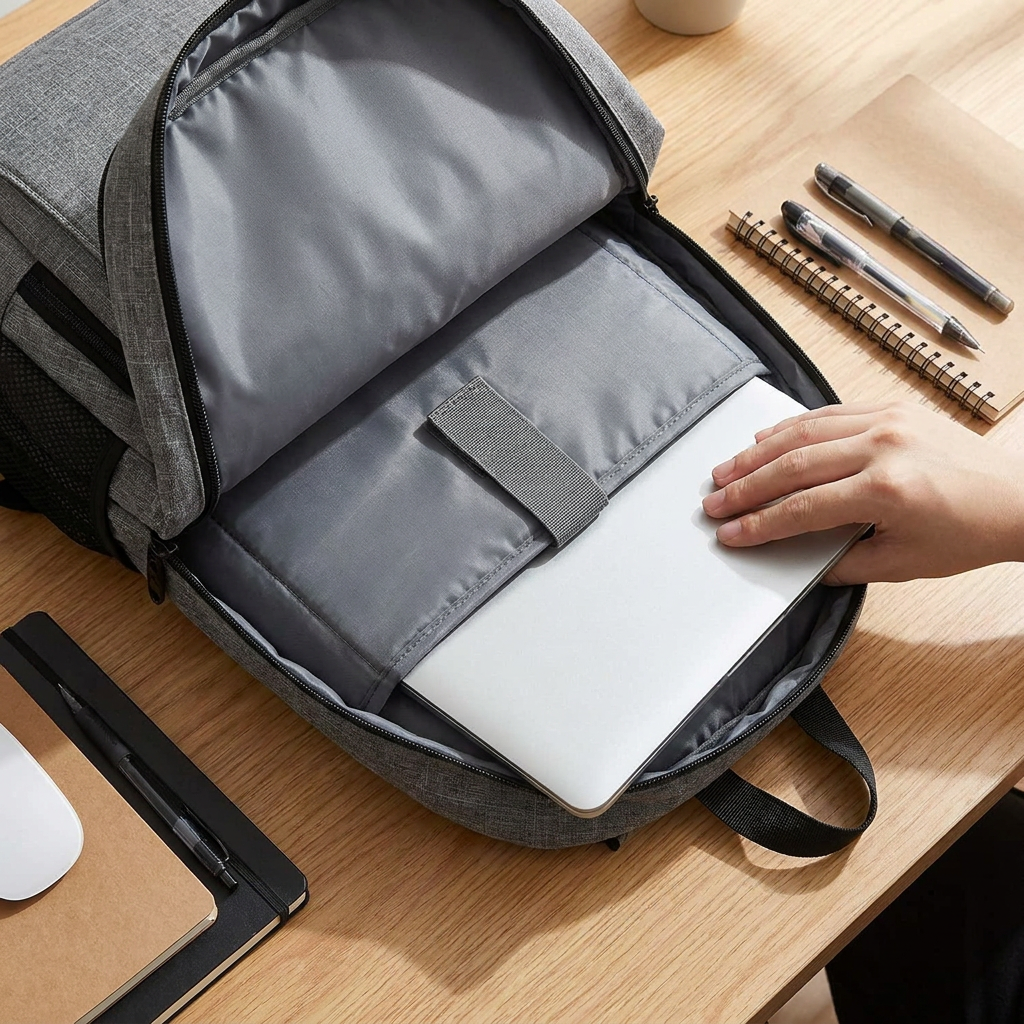
One of the most common questions behind "best backpack for middle school" is: "Will the Chromebook fit?" Stated compatibility (for example, up to 15.6") is only the first filter. Real protection depends on three things: how well the pocket holds the device in place, how much padding sits between the laptop and impacts, and—most importantly—whether the bottom is effectively "protected" or whether the laptop ends up taking the hit when the backpack is dropped.
In work-oriented designs like the MATEIN Travel Laptop Backpack, the laptop pocket is often central to the experience: clearer separation and more orderly access. That can help a student who opens and closes the bag many times a day and doesn’t want cables, notebooks, and snacks mixed together. The middle-school-specific caution is simple: backpacks get dropped, not gently set down. If the base isn’t structured enough or the sleeve sits too low, the impact can transfer to the device even if it "fits perfectly."
If you want a practical check before choosing among the best backpacks for middle school, try this: place a rigid notebook behind the laptop sleeve and see whether that area becomes more stable. If the back panel still folds easily with a typical load, the device is more likely to take knocks when the bag is full. If the sleeve stays stable and the device doesn’t slide, day-to-day school use is less stressful.
A tablet sleeve (as on the High Sierra Loop Backpack) can be useful when school alternates between device and books: tablet, small notebook, planner. But if the student carries a larger laptop plus a charger, you want a layout that doesn’t force everything to be wedged together. A commonly overlooked detail: chargers are dense and can press into a screen area if they end up in the wrong spot. It’s better if there’s a dedicated pocket, or at least a place where it won’t sit directly against the device.
Zippers, stitching, and failure points: how to read early wear
Backpack durability in middle school rarely fails "gracefully." It gives out where stress repeats: zippers yanked in a hurry, straps pulled when the bag is overloaded, the base dragged under desks. The difference between a best backpack for middle school and a mid-year replacement usually shows up once daily use starts adding up—when materials either begin to loosen and snag, or stay stable despite rough handling.
Three early warning signs are worth watching because they often predict bigger failures:
- Zippers that catch fabric: if a zipper snags from the start, it tends to worsen; it’s not just annoying, it accelerates wear on both fabric and slider.
- Stitching that looks stressed at edges: when thread tension starts pulling fabric, it can signal poor reinforcement at load points or a load that’s being carried in an unstable way.
- A base that loses shape: a too-soft bottom deforms, contents push downward, and impacts on books and devices increase.
Among the models discussed here, the JanSport SuperBreak One is the classic "essential" backpack: one main compartment and a front pocket. That simplicity can help durability by reducing mechanical failure points (fewer internal dividers, fewer zippers). But because it’s light and minimal, it isn’t always the best middle school backpacks choice for heavy loads: when packed to the top, it can feel less comfortable and less protective for electronics than a design with a dedicated device compartment.
On the other end, more organized backpacks (like the JanSport Laptop Backpack and JanSport Cool Backpack, both with a 15" sleeve) add function but also complexity: more internal stitching and panels. That’s not automatically a downside; it just means zipper quality and seam reinforcement matter even more. In middle school, where the bag may be opened and closed many times a day, a smooth, sturdy zipper can matter as much as capacity.
Typical scenarios: which model fits a real school day
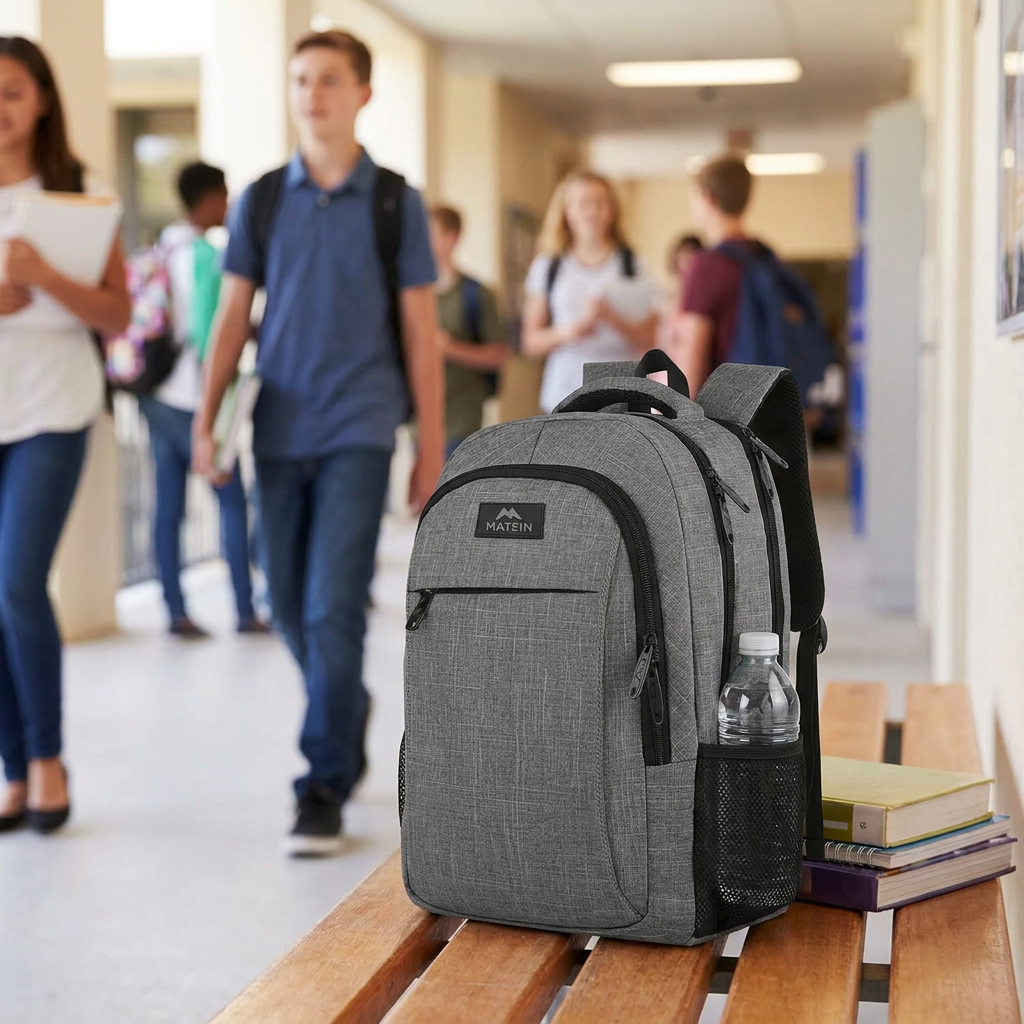
To make the best backpack for middle school decision more concrete, it helps to think in scenarios. There isn’t one "perfect" backpack for everyone: constraints change (required device, sports, public transit), and so does how a student uses the bag (organized vs. chaotic). The table below isn’t a ranking; it links a use profile to a set of trade-offs.
| Middle School Scenario | Model | Why It Can Work (And Where It Can Limit) |
|---|---|---|
| Daily device + organized day, few bulky items | MATEIN Travel Laptop Backpack | Clean layout and a laptop-focused setup; less flexible if gym shoes, thick hoodie, or bulky gear shows up often |
| Minimalism, light/medium load, simplicity first | JanSport SuperBreak One Backpacks | Simple and quick to use with fewer failure points; less structure and less device protection for fragile electronics or heavy loads |
| Mixed day (books + tablet), quick access to small items | High Sierra Loop Backpack | More school-style organization and a tablet sleeve; check real space if a larger laptop and charger are also daily carry |
| Frequent 15″ laptop + need to separate notebooks and tech | JanSport Laptop Backpack | Two-compartment approach and a dedicated sleeve help; can feel taller/less compact than a slim pack in crowded hallways |
| Heavier carry and intense use, with a need for order | JanSport Cool Backpack | More structured for full days; if the student carries very little most days, it may be more backpack than necessary |
When you want to verify details without relying on generic descriptions, it helps to check the product page for interior photos and pocket layout. For example, to understand whether the profile and laptop compartment match a school routine, you can look at the MATEIN Travel Laptop Backpack product page for internal photos and overall layout.
Likewise, if you’re considering a very minimal setup, it can help to see how the inside of the JanSport SuperBreak One Backpacks product page is arranged: simplicity is a plus if the student doesn’t want lots of compartments, but it means you’ll need to be more intentional about protecting tech.
For a more school-forward layout and mixed notebook/device carry, it can be useful to review the structure on the High Sierra Loop Backpack product page, especially to see how pockets are distributed relative to the main compartment.
A note for anyone searching best backpack for middle school boy or best backpacks for middle school girls: the meaningful difference usually isn’t "for boys/for girls," but between students who carry a lot versus a little, who do sports versus don’t, and who carry a fragile laptop versus a rugged tablet. Style matters, but the daily scenario decides whether the backpack stays comfortable and intact—or becomes a recurring problem.
Adjustments and habits that actually change comfort
Many people search for the best backpack for middle school and then "lose" it in practice—not because the backpack is wrong, but because it’s worn poorly. The pattern is consistent: loose straps, backpack hanging low, weight pulling backward. Within a week, shoulder and neck discomfort shows up, and even a well-designed bag starts to feel bad.
Three practical habits can matter more than one extra pocket. First: tighten the shoulder straps so the backpack sits higher and closer to the back, without swinging during class changes. Second: pack the heaviest items (textbooks, binders, device with charger) against the back panel, not toward the outside; that keeps the center of gravity from pulling on the shoulders. Third: avoid a "pile" at the bottom; when everything sinks, the weight drops and posture gets worse.
A clear stance: if a middle school backpack is carried daily on one shoulder, no model stays the best backpacks for middle school for long. The product matters, but the habit matters more. It’s also a fast way to test sizing: if, with both straps adjusted, the backpack stays stable and doesn’t hang far below the hips, the fit is likely workable; if it still drifts down and pulls, the shape isn’t right for that body or that load.
For students who alternate school and sports, a time-saving rule is to keep the "gym kit" in a soft drawstring bag inside the main compartment. It reduces friction against notebooks and devices and speeds up transitions between locker, hallway, and changing room. If shoes and clothes end up pressed directly against the laptop area, the backpack tends to wear faster and the device takes more knocks than it needs to.
When this type of backpack really becomes the best backpack for middle school
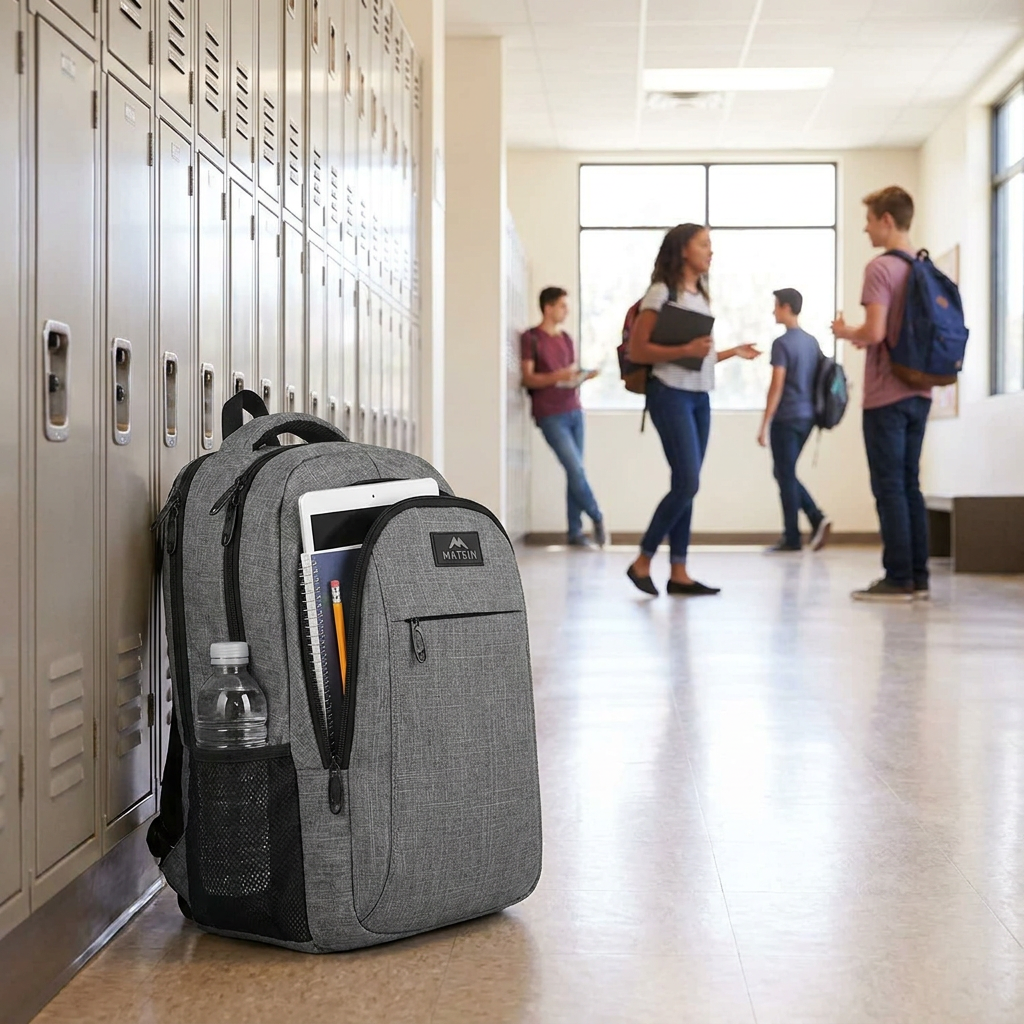
It makes sense when the day is fairly "organized": the device is almost always present, there are notebooks and a few books, bulky extras are rare, and the priority is moving without too much bulk. In that profile, a slimmer, more organized layout can feel easier in hallways and quicker to open and close without mixing cables, snacks, and supplies.
It’s not the right choice for students who often stuff the bag with bulky items (shoes, instruments, large containers) or who regularly overload it: a "clean" structure fills up sooner and becomes less practical. If the load is frequently heavy and the backpack gets rough treatment, a more structured, school-forward design with a more forgiving main compartment tends to be more tolerant in real life, even if it looks less sleek.
Frequently asked questions
What’s the best backpack for middle school if the load changes a lot during the week?
You want a compromise: enough volume for "full" days, but not so large that it encourages carrying unnecessary weight. If two days a week include sports or labs, flexibility in the main compartment matters more than lots of tiny pockets.
Does the best backpack for middle school boy or for girls actually differ?
Most of the time, style changes more than function. The better choice depends on height, shoulder width, how it’s worn, and—most of all—how heavy the backpack is at the end of the day, not on gender.
When does a simple backpack make more sense than a more organized one?
A simple design works if the student carries fewer items and doesn’t need to separate tech, notebooks, and accessories. If there are cables, a charger, and small items that need to be found quickly, organization reduces stress and wasted time between classes.
Can a "high school" backpack be the best backpack high school and still work for middle school?
It can, but only if it isn’t too tall or bulky for hallways and lockers and if it stays comfortable on a growing body. If it throws balance off or catches on everything, daily practicality drops fast even if capacity is great.
Practical choice: when to pick MATEIN and when not to
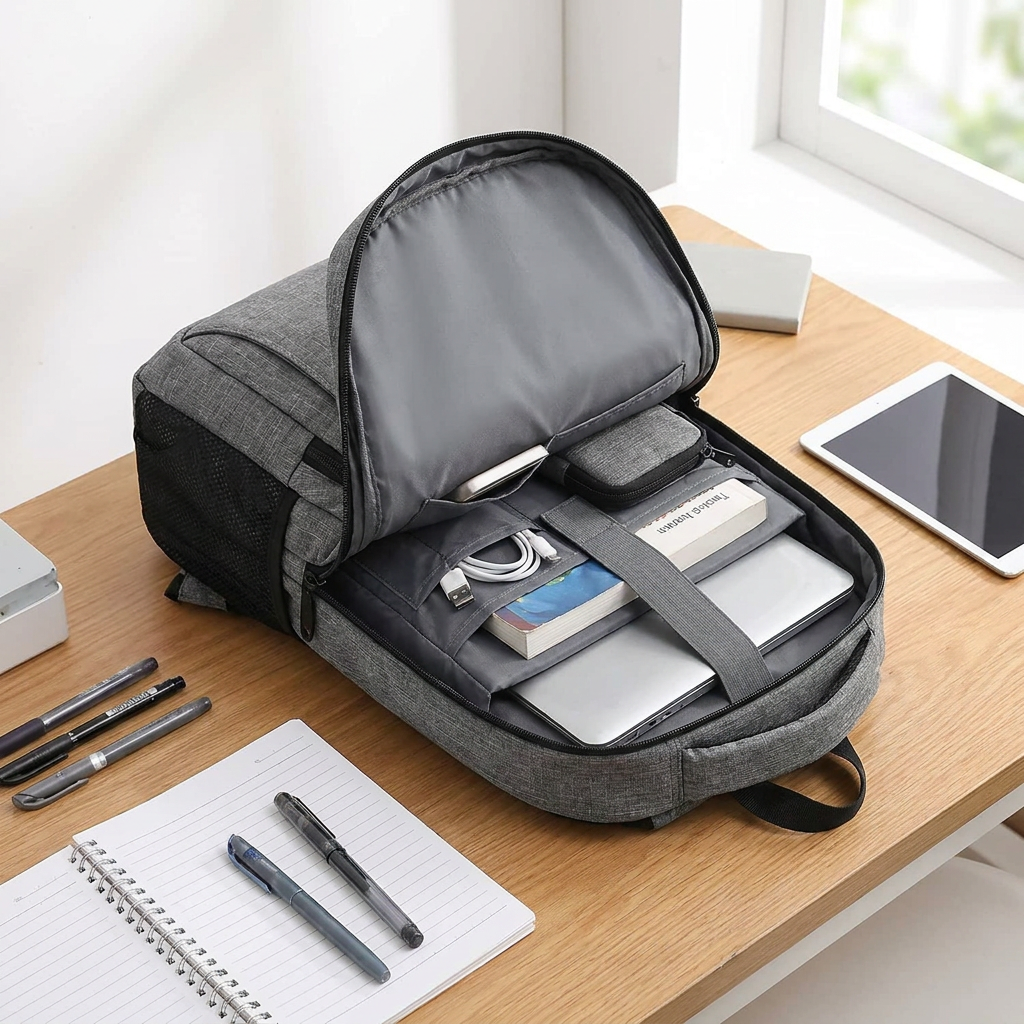
The MATEIN Travel Laptop Backpack can make sense as a best backpack for middle school for students who want order, a relatively slim profile, and clear tech management, with a fairly predictable routine (few bulky extras). If you want to verify details like pocket layout and laptop-compartment access, the MATEIN Travel Laptop Backpack product page is mainly useful for interior photos and real-world layout.
If the use is more "battle mode" and the backpack often needs to swallow bulky items or heavier loads, it’s usually smarter to move toward a more school-forward, structured design, even if it’s less sleek. In that case, the goal isn’t the most elegant backpack—it’s the one that stays comfortable and practical when the day gets messy. That’s where, in middle school, the "best middle school backpacks" label is truly earned.