
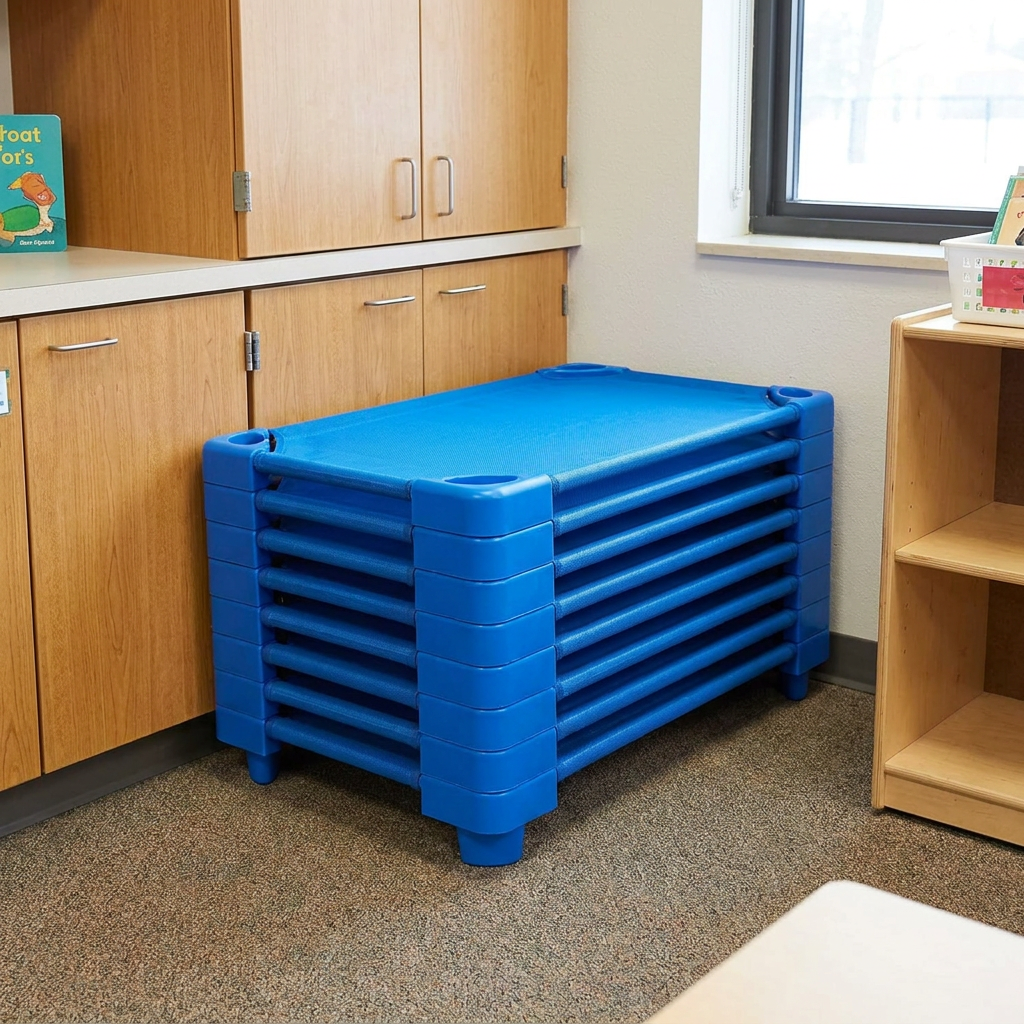
ECR4Kids Stackable Kiddie Cot is a 6-pack of stackable toddler nap cots for classrooms, designed for vertical storage and simple assembly at cot level.
For classrooms that run daily rest time, this type of cot system can be a clean, space-aware way to standardize naps without leaving bulky sleep gear piled in corners. But it’s not a universal fix. It asks for floor space, a consistent cleaning routine, and staff who won’t dread setup and breakdown.
Compare products: ECR4Kids Stackable Kiddie Cot · ECR4Kids 5-Compartment Mobile Storage Cabinet · ECR4Kids 2-Shelf Mobile Storage Cabinet
Three expectations keep decisions realistic.
- Plan for a 6-cot footprint plus vertical storage space, not "one cot" space.
- Assume frequent wipe-downs and periodic deeper cleaning, because nap furniture gets used hard.
- Match the cot format to supervision and traffic flow, not just to the room’s headcount.
How the ECR4Kids Stackable Kiddie Cot fits into furniture classroom
This cot set sits in a narrow slice of furniture classroom: toddler rest equipment that needs to be fast to deploy, easy to separate between children, and compact to store. The defining detail is the format. It’s a 6-pack, and it’s designed to stack. That changes the buying logic.
A single cot can be an improvisation. A six-cot set is a system decision. It influences where nap time happens, where the stack lives when it’s not nap time, and how staff move children through the room without turning rest time into a traffic jam.
Ready-to-assemble matters too. Assembly isn’t a dealbreaker, but it’s real labor. A classroom that already struggles to keep up with setup tasks will feel every extra fastener and every missing tool.
For readers who want to verify the exact listing details, the product page for ECR4Kids Stackable Kiddie Cot is the cleanest place to confirm what’s included in the 6-pack and how the stack is shown.
A direct take on the main decision: is this kiddie cot set worth considering?
This cot set tends to make sense when rest time is daily, predictable, and staffed consistently. The main strength is logistical. Stackable cots reduce storage chaos and keep nap equipment from spreading into learning zones.
The main trade-off is that the "system" aspect cuts both ways. Six cots commit floor area during nap time, and the stack needs a home the rest of the day. That can feel tight in smaller rooms, or in rooms with large activity centers that can’t move.
It’s also a fit question by age. The listing frames it as toddler size. That’s useful clarity. It also signals a limit for older kids, even before comfort gets discussed.
What to check before buying furniture classroom rest cots
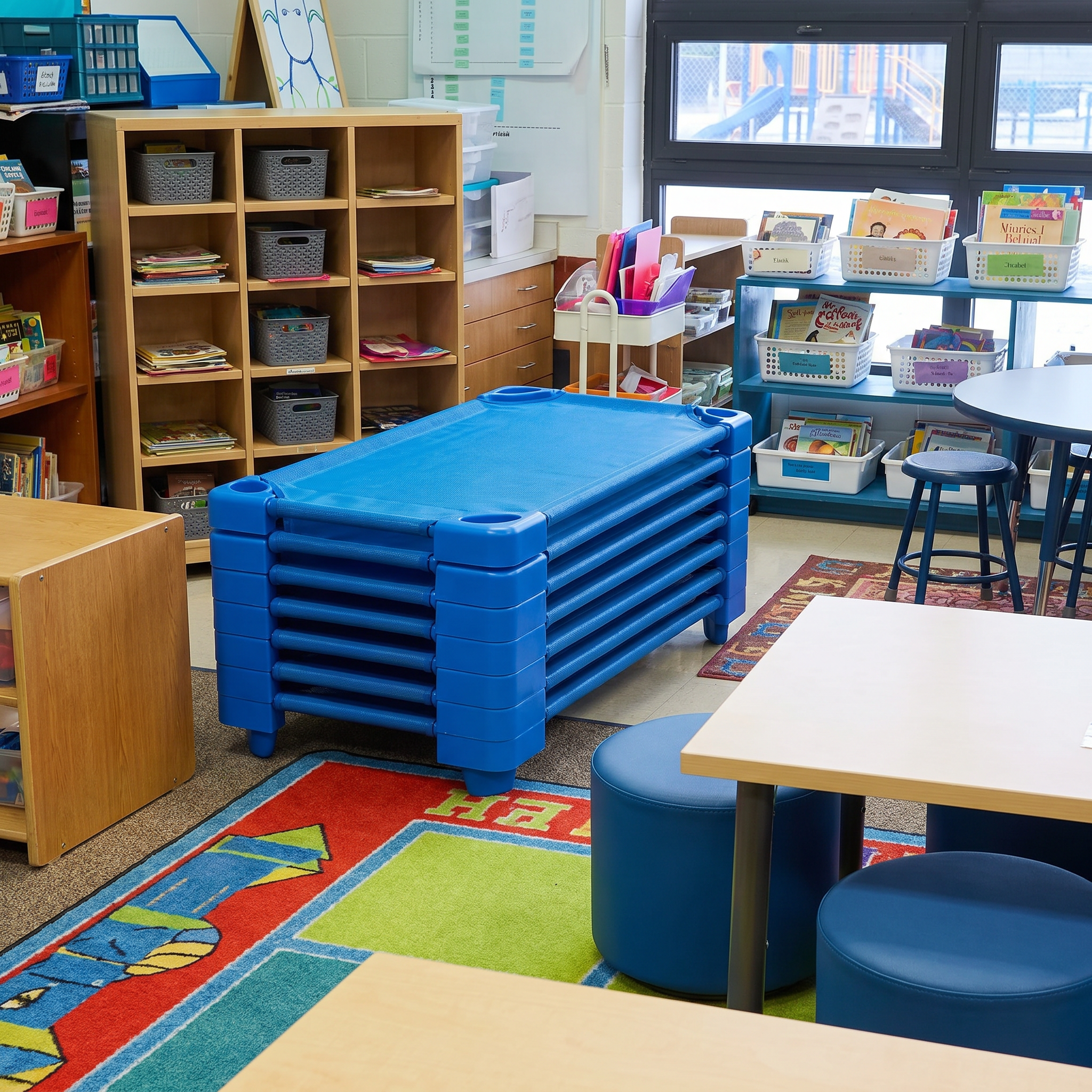
Most furniture classroom listings highlight color and quantity. Those aren’t the risk points. The risk points are dimensions, cleaning practicality, and how the cot behaves under daily handling.
Start with space planning. A 6-pack means six individual sleep spots plus walking lanes for staff. Keep enough clearance for adults to move and supervise without stepping over bedding. If aisles get too tight, setup slows down and supervision gets harder.
Then look at the height of the sleep surface. Low-profile toddler cots reduce fall risk and make it easier for a child to get on and off without being lifted. But low also means adults bend more. That matters in classrooms with frequent lifting restrictions or staff back issues.
Cleaning is the next filter. Nap furniture sits in the mess zone: drool, runny noses, occasional accidents. Smooth surfaces, minimal crevices, and materials that tolerate disinfectant wipes make daily resets realistic. A cot that’s "cleanable" in theory but annoying in practice ends up getting cleaned less often.
For a general reference on cleaning and disinfecting in childcare settings, the U.S. Centers for Disease Control and Prevention maintains guidance for schools and early care programs in its cleaning and hygiene resources.
Finally, check the workflow details that rarely show up in photos.
- Stack stability: a tall stack should feel controlled when moved or bumped, not top-heavy.
- Noise and friction: scraping legs and loud stacking can disrupt settling routines.
- Labeling: a simple way to assign cots reduces mix-ups in multi-classroom use.
How this ECR4Kids cot set compares to other furniture classroom priorities
Classroom purchases don’t happen in isolation. Rest cots compete for budget and floor space with storage, circulation paths, and flexible learning areas. That’s where this product either fits cleanly or becomes a compromise.
In many toddler rooms, storage is the pressure point. Mobile cabinets can tighten routines by keeping materials off tables and out of walkways. ECR4Kids sells storage units that often get considered alongside nap equipment because both purchases aim at order and supervision.
A 5-compartment mobile cabinet can support classroom flow when centers need quick resets and when teachers rotate materials by day or by week. The trade-off is that mobile storage takes wall space and turning radius. It’s not "free" just because it rolls. The listing for ECR4Kids 5-Compartment Mobile Storage Cabinet helps clarify the format and how compartments are arranged, which matters for real classroom sorting.
A 2-shelf mobile cabinet is simpler. It can be easier to live with in tight rooms because it behaves more like a rolling cart than a full organizer. But open shelving can also invite clutter unless there’s a clear bin system. For readers weighing that approach, the product page for ECR4Kids 2-Shelf Mobile Storage Cabinet shows the basic layout and whether the proportions match the room’s storage plan.
Rest cots and mobile storage solve different problems, yet they collide in one place: where things go when they’re not in use. A stack of six cots needs a defined parking spot. A rolling cabinet does too. If both get purchased without a layout plan, furniture classroom starts to feel crowded fast.
Ergonomics and age fit: toddler size is a real constraint
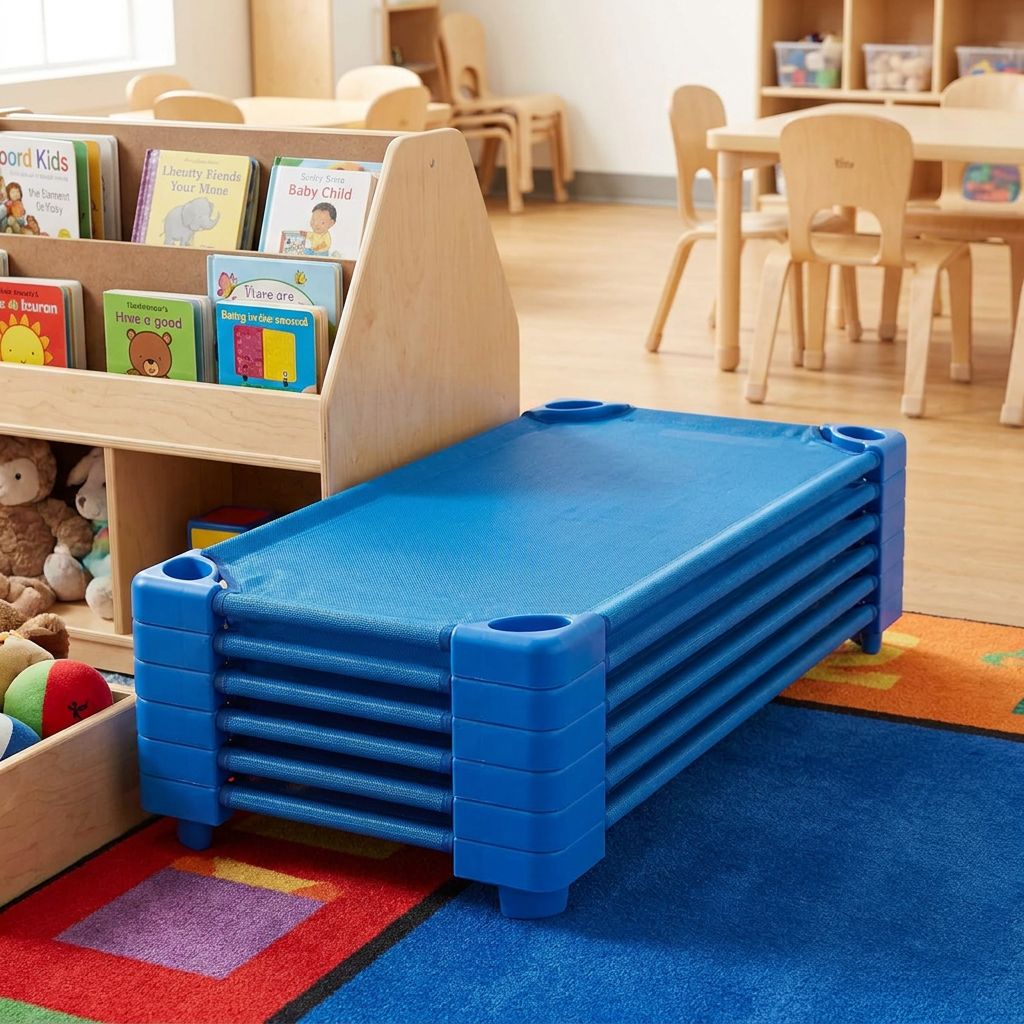
Furniture classroom choices for rest time get tricky because "toddler size" isn’t a vibe. It’s a constraint that shows up in supervision, comfort, and how often staff end up repositioning children mid-rest.
For toddlers, a low sleep surface reduces the distance of a roll-off. That matters in rooms where settling routines include a lot of movement in the first 10 minutes. But the same low profile asks more of adults’ backs. If staff are bending and reaching 12 times per day across a row of cots, fatigue becomes part of daily operations, not an edge case.
Spacing drives the real ergonomics. Leave enough room between sleep surfaces for adults to move, place blankets, and check children without bumping frames. When spacing gets too tight, setup gets louder and more chaotic, and staff start stepping sideways through the row.
Comfort is also about airflow and heat. A raised cot surface tends to breathe better than mats on the floor, especially in rooms with heavy afternoon sun. Yet breathability doesn’t fix everything. If the cot fabric is stiff or the tension is high, smaller toddlers settle quickly while larger or restless sleepers may keep shifting, which can ripple into the whole group.
For classrooms mixing older preschoolers with toddlers, this stackable cot format can feel undersized even before durability is questioned. That’s where furniture classroom planning needs honesty. A cot that fits the youngest perfectly can still be the wrong standard if the group ages up mid-year.
Durability and safety signals to look for in furniture classroom rest cots
Durability isn’t only about "strong." It’s about how the cot handles daily lateral forces: dragging, twisting when a child sits on the edge, and repeated stacking. Those are the failure modes that show up in real childcare rooms.
Listings that cite third-party testing or clear performance claims tend to be more useful than vague marketing language. Some classroom furniture categories reference ANSI/BIFMA performance standards in the U.S. (especially seating and tables). A toddler cot isn’t an office chair, but the buying mindset still applies. Look for stated load limits, stability claims, and clear material descriptions rather than broad assurances.
Small hardware details can be the difference between "fine for years" and "constant maintenance." Watch for protruding fasteners, sharp corners, and leg ends that can snag. Glides that sit flush reduce floor gouging and reduce the chance a cot catches on carpet tiles during stacking.
Tip behavior matters too. A low cot is harder to tip fully, but it can still rack sideways if a child climbs on from the long edge. In rooms with climbers, the safest approach is layout plus supervision, not faith in any one design. Place cots so the long edges aren’t right against high-traffic lanes.
For broader child product safety context in the U.S., the Consumer Product Safety Commission’s child safety resources can help with hazard thinking, even when a specific cot model isn’t named. See the CPSC’s crib and sleep-related safety education.
Cleaning workflow: what holds up over the first months of daily use
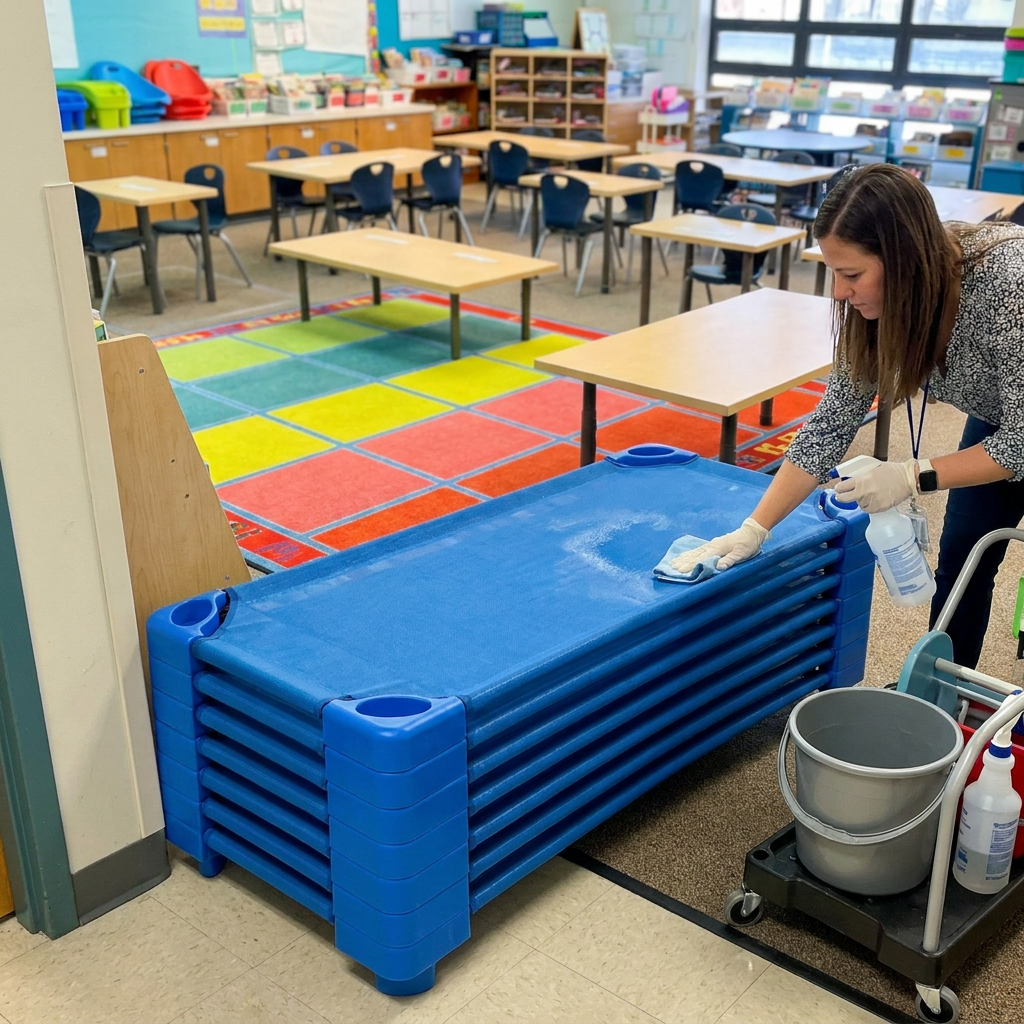
Furniture classroom rest systems rarely fail on day one. They fail when cleaning and setup collide with time pressure. The first months are the window where staff either lock in a repeatable routine or start cutting corners.
Daily wipe-down is the easy part. The friction comes from seams, corners, and any place that traps moisture. If the cot surface has stitching channels or textured areas, dried residue builds up faster than expected. That doesn’t always show in photos. It shows during the third deep clean when staff realize each cot takes longer than the schedule allows.
Disinfectant compatibility is another quiet variable. Early care programs use different disinfectants depending on policy and local guidance. Some plastics haze. Some fabrics stiffen. If the listing doesn’t state chemical resistance, plan a small test routine and stick to one consistent product rather than rotating harsh cleaners week to week.
Odor control is also part of cleaning reality. If cots are stacked before they’re fully dry, a "clean" cot can still smell stale in a week. Drying time needs to be built into the schedule, even if it’s brief. That’s a workflow issue, not a product flaw.
Labeling helps hygiene too. Assigning each child a consistent cot reduces cross-use and simplifies troubleshooting when one cot develops a persistent stain or odor. It also helps staff notice when a single unit is wearing faster than the rest.
Choosing between the cot set and mobile storage: a scenario table for tight rooms
These ECR4Kids items get considered together because they compete for the same scarce resource: open floor. The cot set claims floor space during rest time. Mobile cabinets claim floor space all day.
| Room Constraint | Option To Prioritize | Why It Changes Daily Function |
|---|---|---|
| Daily nap time, no dedicated closet | ECR4Kids Stackable Kiddie Cot | Vertical stacking reduces "where does it go" chaos after rest time. |
| High material turnover, frequent center resets | ECR4Kids 5-Compartment Mobile Storage Cabinet | Compartmented storage speeds cleanup and keeps bins assigned by category. |
| Very tight room, narrow turning areas | ECR4Kids 2-Shelf Mobile Storage Cabinet | Open shelves behave like a cart and can be parked with less wall commitment. |
| Mixed-age group with inconsistent rest routines | Mobile storage first | Rest equipment may sit unused, while storage impacts every block of the day. |
In practice, the cot set pays off when rest time is dependable. It becomes less convincing when naps are optional or when half the group is phasing out of naps. Storage stays relevant either way, but it can also become a rolling obstacle if casters are small or the unit is overfilled.
Among the storage options, the 5-compartment cabinet supports sorting discipline. It also demands that the room has a logical "garage" spot for it. The 2-shelf cabinet is easier to live with in rooms that constantly reconfigure, but it can drift into clutter storage unless bins and labels are enforced.
For readers who want to confirm the current configuration shown by the seller, the product pages for ECR4Kids 5-Compartment Mobile Storage Cabinet and ECR4Kids 2-Shelf Mobile Storage Cabinet show the layout details that tend to matter most in real classrooms.
Procurement reality for furniture classroom: delivery, assembly, and what gets overlooked
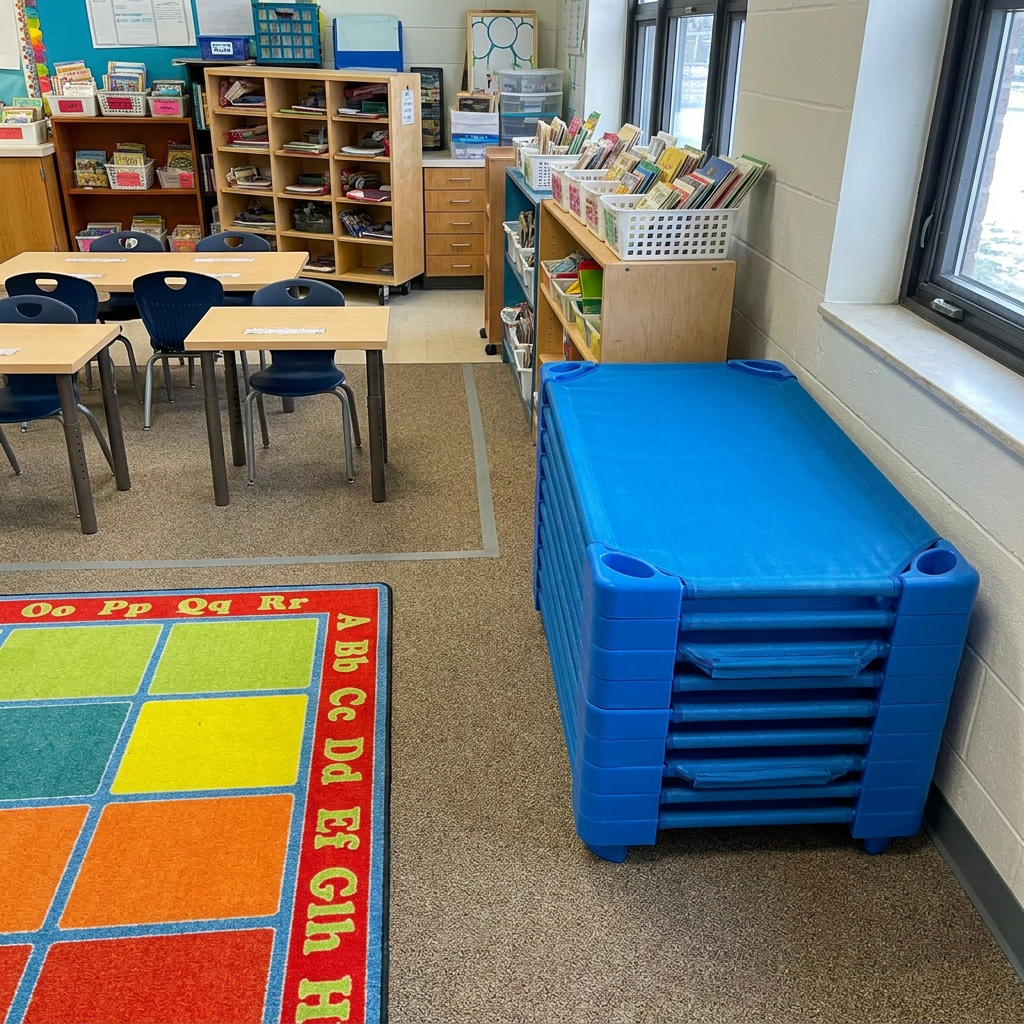
For furniture classroom purchases, the biggest surprises rarely come from the photo. They come from the day the boxes arrive. A six-pack like the ECR4Kids Stackable Kiddie Cot shifts the workload forward: receiving, counting parts, assembling, then finding a long-term "parking" spot for the stack that doesn’t block routines.
Freight isn’t always involved for a cot set, but the same receiving discipline applies. Plan a short check on delivery day to inspect carton condition, confirm the count matches the packing slip, and photograph any visible damage before anything gets moved into storage. That step protects the buying team when a leg, connector, or fastener is missing and the classroom is left with five usable units instead of six.
Assembly time matters because it’s a hidden cost. A ready-to-assemble cot set tends to go smoothly when tools are already on hand and parts are clearly labeled. It drags when hardware is mixed, instructions are vague, or staff are assembling between classroom tasks. A realistic approach is to stage assembly in a clean corner, keep small parts in one tray, and build one cot fully before repeating the process on the remaining five. That prevents repeating the same mistake six times.
Returns are also different at "system" scale. One damaged piece can make the whole purchase feel unusable. Before committing, it’s worth checking whether replacement parts are supported through the seller or manufacturer and whether the return window covers the time needed for delivery, inspection, and assembly. That’s where furniture classroom shopping becomes procurement, not browsing.
Nuances that decide day-to-day satisfaction more than the listing does
The ECR4Kids Stackable Kiddie Cot tends to succeed or frustrate based on routine fit, not on a single spec. The set format makes rest time more orderly when the classroom already runs on predictable cues. It can feel like friction when the room changes shape constantly.
Noise is one of the quiet dealbreakers. Stacking and unstacking can be either calm or clattery depending on how the legs meet, how tightly parts fit, and whether the floor surface amplifies sound. A classroom that relies on a soft transition into rest time will notice the difference immediately. A louder stack routine doesn’t make the product "wrong," but it changes staff behavior. People start rushing.
Then there’s the question of "who owns the setup." In rooms where one adult consistently runs rest time, a cot system becomes muscle memory. In rooms with rotating staff, substitute coverage, or shared spaces, labeling and a fixed storage location stop being optional. They become the difference between an orderly reset and cots drifting into hallways.
One more nuance: storage competition. The cot stack needs a home that stays open all year. That can collide with mobile storage decisions. The ECR4Kids 5-Compartment Mobile Storage Cabinet can be the better operational upgrade when the room’s biggest daily pain is cleanup discipline, but it also claims a permanent footprint and turning radius. The ECR4Kids 2-Shelf Mobile Storage Cabinet interferes less with traffic, but open shelves can turn into "temporary parking" for anything without a home. In a tight furniture classroom, that clutter effect often matters more than the number of shelves.
When this setup fits well, and when it will be a constant annoyance
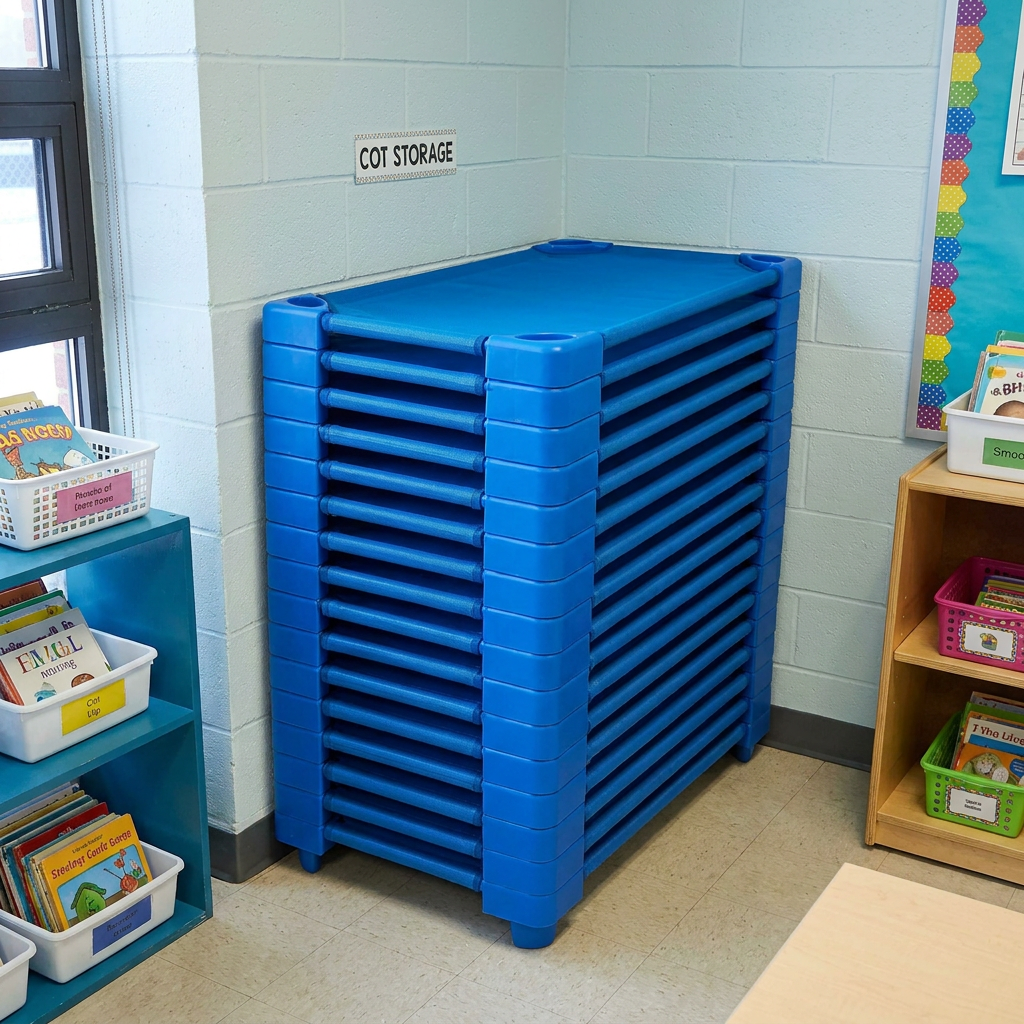
This cot set fits classrooms with daily rest time, consistent staffing, and a defined storage wall or closet zone for a vertical stack. It also fits programs that want standardized sleep spots for toddlers and are willing to run a simple hygiene routine that includes drying time before stacking.
It won’t fit rooms where naps are irregular, where half the group is aging out mid-year, or where the only available storage spot blocks a main aisle. It also clashes with spaces that reconfigure several times a day and don’t have a stable "home base" for bulky items, even when they stack.
Frequently asked questions
Does "furniture classroom" mean it works for any classroom?
No. "Furniture classroom" describes the selling context, not a guarantee that the size or workflow fits every room. Always check space, routines, and age group.
How much does it matter that it’s a 6-pack instead of a single cot?
It matters a lot, because it changes logistics and responsibility. A set needs a fixed storage spot and a repeatable setup and put-away routine, or it becomes disorder multiplied by six.
Is it a sensible buy if nap time isn’t daily?
Usually not, unless the program is trying to enforce a stable routine. If rest time is occasional, the "unused footprint" often outweighs the benefit on the few days it’s needed.
What’s the most common doubt before choosing a cot system for furniture classroom use?
Space isn’t only "do they fit." Staff also need room to move, supervise, and stack cots in a dry spot without blocking activities or exits. When that’s missing, even a good product becomes tiring.
Verdict and a use case that makes it a solid choice
For toddler classrooms that run daily rest time, ECR4Kids Stackable Kiddie Cot is a convincing option because the vertical stack reduces storage chaos and makes nap setup repeatable.
It sacrifices some flexibility to get that order. Whether it fits depends on having a stable parking spot for the stack and a routine that keeps cleaning and drying realistic.