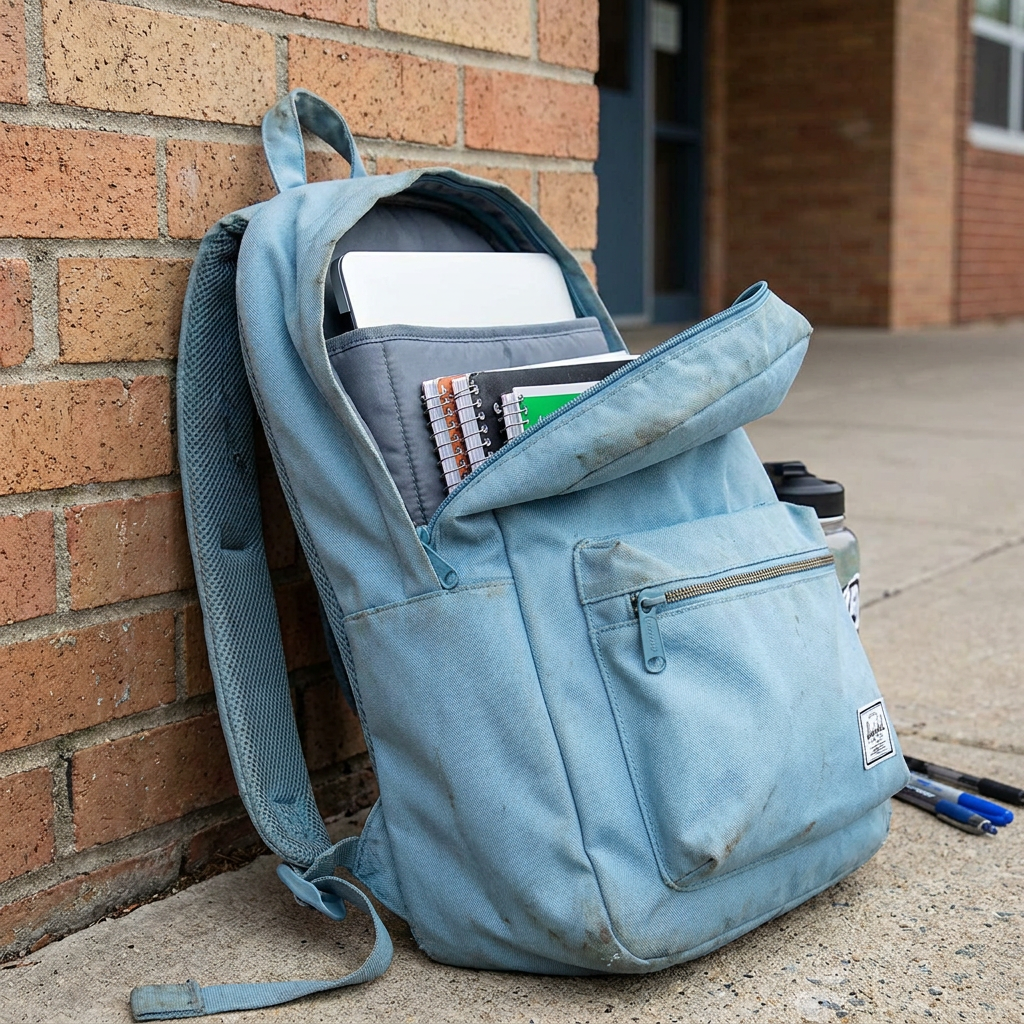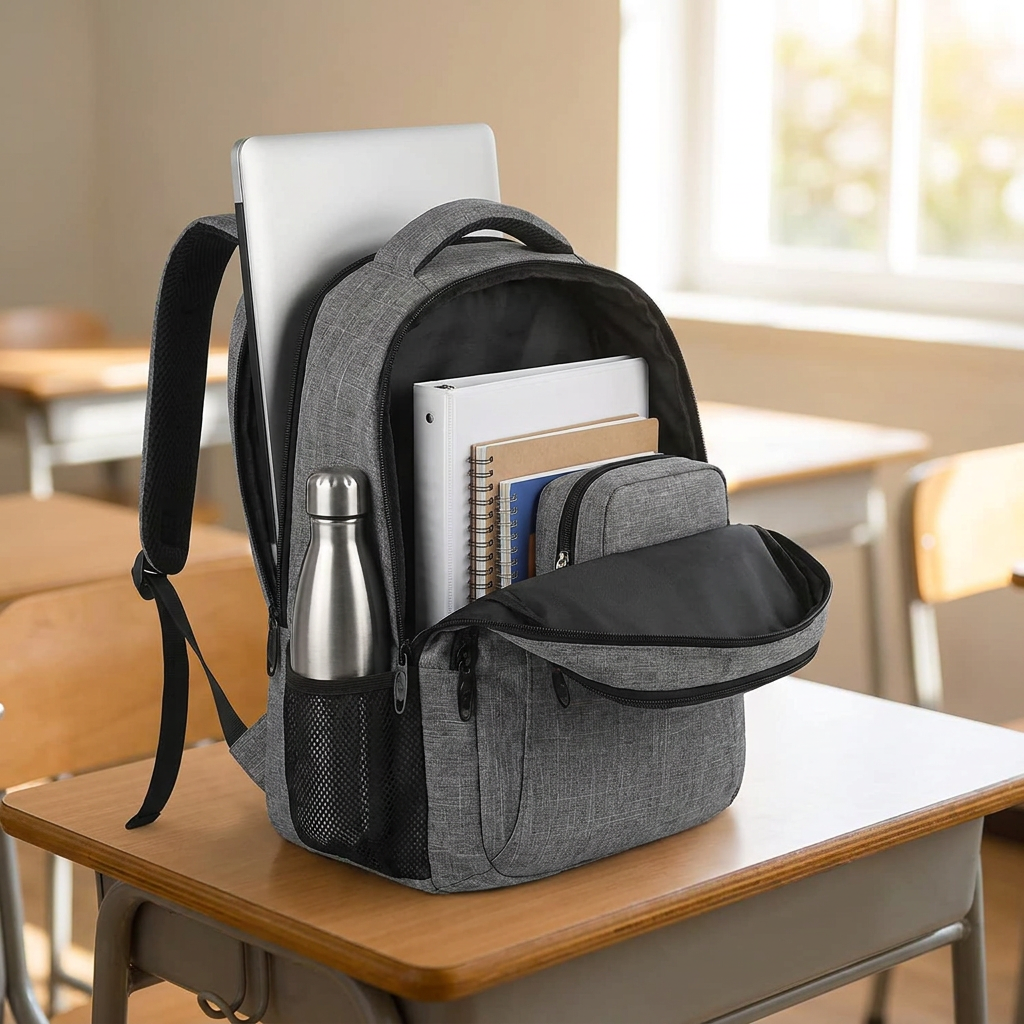
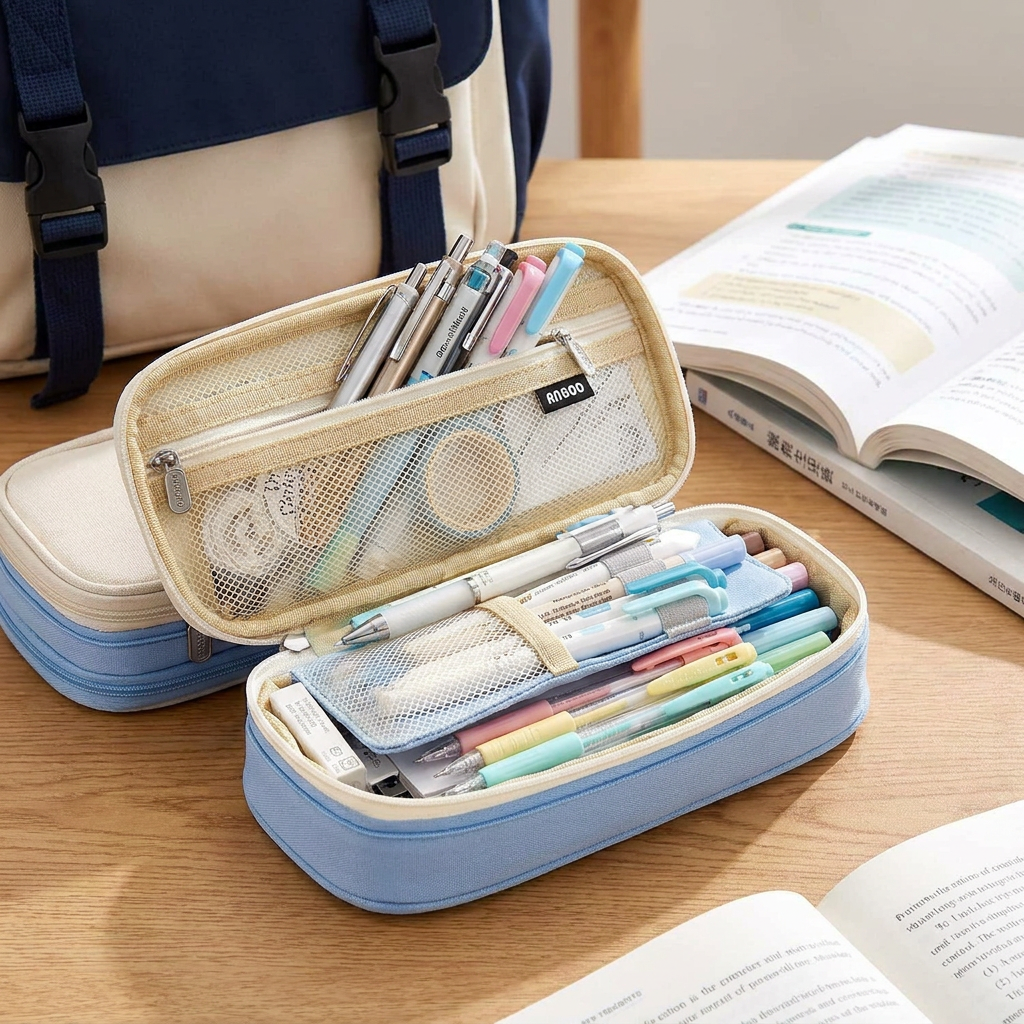
A big pencil case works best when it stays rigid when packed, zips smoothly, and fits a backpack pocket without bulging.
The EASTHILL Big Capacity Pencil Pen Case Office College School Large Storage High Capacity Bag Pouch Holder Box Organizer Light Blue is built around one promise: carry a lot of writing tools in one place without turning into a messy sack. That sounds simple, but "big capacity" pencil cases tend to fail in the same three ways—weak zippers, soft walls that collapse on the desk, and a shape that becomes annoying in a backpack once it’s full.
For most students and office users, the decision is less about "cute vs plain" and more about whether a large pencil case helps or slows things down. Some people need a case for pencils that opens wide and stays open; others need something that disappears into a slim bag. Capacity is only a benefit when the layout prevents rummaging.
- Pick big capacity only if the loadout is stable (same tools daily), otherwise it becomes clutter.
- Zipper feel matters more than fabric feel; a sticky zip is the first daily frustration.
- Desk behavior is a real test: if it collapses, tools scatter and the "organizer" claim collapses too.
Who a large pencil case like this suits (and who it does not)
This pencil case makes the most sense for people who carry a mixed set—pens, mechanical pencils, a couple of highlighters, correction tools, and small accessories—rather than a minimal "two pens and a pencil" kit. A large pencil pouch can keep everything together and reduce the number of loose items in a backpack, but it adds bulk that some users immediately regret.
Good fit tends to look like this: the bag is already medium or large, there is a predictable daily set of items, and the pencil case’s role is to prevent damage (tips snapping, caps popping off) and reduce time spent searching. Not ideal: a small shoulder bag, a crowded laptop bag, or a student who changes supplies constantly and throws in random extras. In those situations, big capacity turns into a dumping ground.
There is also a style-and-rules reality. Some schools prefer a clear pencil case for exams or require that supplies be visible. A fabric pouch like this will not meet that requirement, regardless of how practical it is day to day. That is not a quality issue; it is a compliance issue that should be checked early.
What "big capacity" really means in a pencil case
Large capacity sounds like an advantage until it is defined. The useful question is not "how many pens," but "how many items can be accessed without emptying the pouch." A big pencil case that opens up wide can feel effortless; a big pencil pouch that stays narrow can feel like a tunnel, even if it technically holds the same amount.
In practice, capacity has three layers:
- Core load: the items used daily (for many users, roughly 8–15 writing tools plus an eraser and a small sharpener).
- Occasional load: extras that are used weekly (sticky notes, a small ruler, spare lead, correction tape).
- Dead weight: duplicates and "just in case" items that inflate bulk and make the pouch harder to close.
A large pencil case is at its best when the core load is protected and the occasional load is easy to find. Without internal separation, everything blends into one layer and the dead weight grows quickly. That is why multi-compartment designs—like a 3 compartment pouch style—often feel smaller than they are: they impose limits that stop clutter. Single-cavity designs can still work, but they rely more on user discipline.
One common expectation trap: a big pencil case does not automatically protect delicate items. If the walls are soft, a gel pen tip can still be pressed, and a fragile lead tube can still be crushed in a tightly packed bag. Protection is a mix of shape, fabric stiffness, and how tightly the case is packed.
For readers comparing popular styles: a zippered pencil case with a wide opening generally supports faster access than a narrow, long tube shape. The trade-off is footprint on the desk. A very wide opening can sprawl and steal space, which is fine in a study room and annoying in a tight classroom desk.
Build and failure points to look for in a zippered pencil case
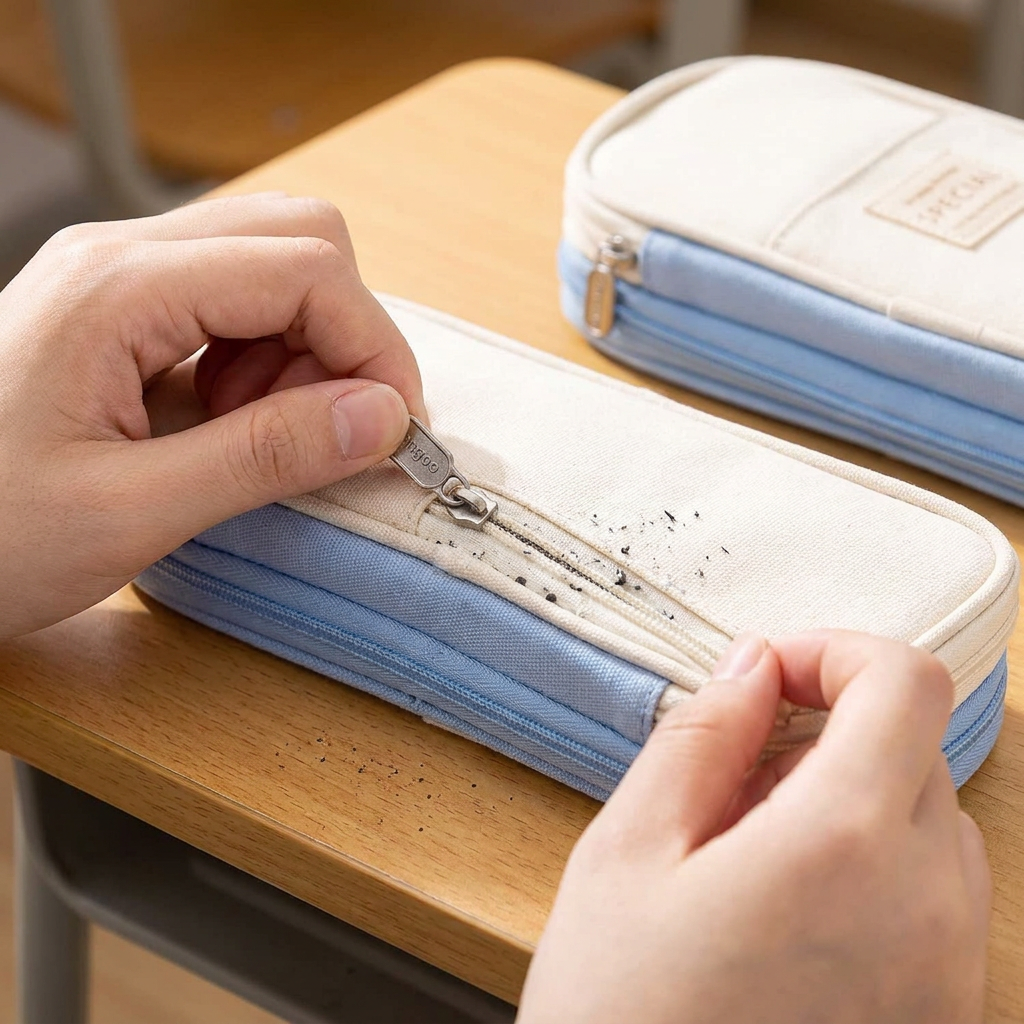
Most pencil cases are judged by appearance at purchase and judged by zippers after a month. The zipper is the mechanical part that takes the most stress: repeated cycles, sideways pulling when the case is overfilled, and grit from graphite dust. When a zipper fails, it usually fails at the slider (it spreads and stops gripping) or at the end stops where the tape is stressed.
For a big capacity pencil case, stress increases because the user is tempted to overpack. The most reliable use pattern is leaving a little "air" inside so the zipper does not need force to close. If closing requires pressing down with a palm, the zipper is being used as a clamp, not a closure.
Stitching matters in a different way. Seams that hold the zipper tape take shear force when the pouch is grabbed by one end and lifted. If a pencil case is often carried by hand between classes, seam reinforcement at the zipper line becomes more important than the thickness of the outer fabric.
Cleaning is another durability angle that is easy to ignore. Pencil cases live with ink marks, graphite smudges, and occasional highlighter leaks. Dark colors hide stains; light colors show them. A light blue pouch looks clean when new and can look tired quickly if thrown loose into a bag with snack crumbs and dusty erasers. That does not mean it is "worse," but it changes how much maintenance it asks for.
For basic care, a simple routine prevents most "looks old" outcomes:
- Empty it weekly and shake out graphite dust; it acts like grit on the zipper.
- Keep caps tight; a single leak can permanently mark the lining.
- Avoid storing wet items (water bottle condensation) next to it; fabric holds odors.
Readers who want to verify the exact listing details, color options, and current seller terms can check the product page for the EASTHILL Big Capacity Pencil Pen Case Office College School Large Storage High Capacity Bag Pouch Holder Box Organizer Light Blue here: see the EASTHILL Big Capacity Pencil Pen Case Office College School Large Storage High Capacity Bag Pouch Holder Box Organizer Light Blue on Amazon.
How this pencil case sits in the "big pouch" landscape
Large pencil cases cluster into a few recognizable styles. Some are "one big room," some are compartment-driven organizers, and some are boxy holders that try to stand upright. The EASTHILL Big Capacity Pencil Pen Case sits in the big-pouch lane: designed to hold a high volume and stay portable, rather than acting like a desktop caddy.
That matters because the alternatives solve different annoyances. A 3 compartment pouch can reduce rummaging; a slimmer pencil case pouch can fit better in a tight bag; a special pencil case that opens up into a tray shape can behave better on a desk. None of those are automatically better. They are responses to different friction points: access speed, space limits, and desk stability.
Two quick comparisons help frame expectations without turning this into a winner/loser contest:
- If the daily friction is "everything gets lost," internal separation often helps more than raw size.
- If the daily friction is "bag is too full," a medium case for pencils can outperform any big capacity option.
Brand-driven searches also shape the market. People looking for a muji pencil case often prioritize minimal shape and neat desk behavior. People searching hello kitty pencil case may prioritize character design and gift appeal. Those are valid priorities, but they can hide functional issues like zipper strain or soft walls. With a big capacity pouch, the functional reality shows up fast because it is used hard.
Part of the reason large pencil cases stay popular is that they reduce "bag and pencil case" juggling—one unit that holds writing tools plus small accessories. The downside is that it becomes a single point of failure: if it is forgotten at home, everything is missing. Some students prefer splitting essentials into a small daily pouch and a backup set kept elsewhere. That approach is less tidy, but it is resilient.
Organization under load: When "big capacity" stays usable at 15–30 tools
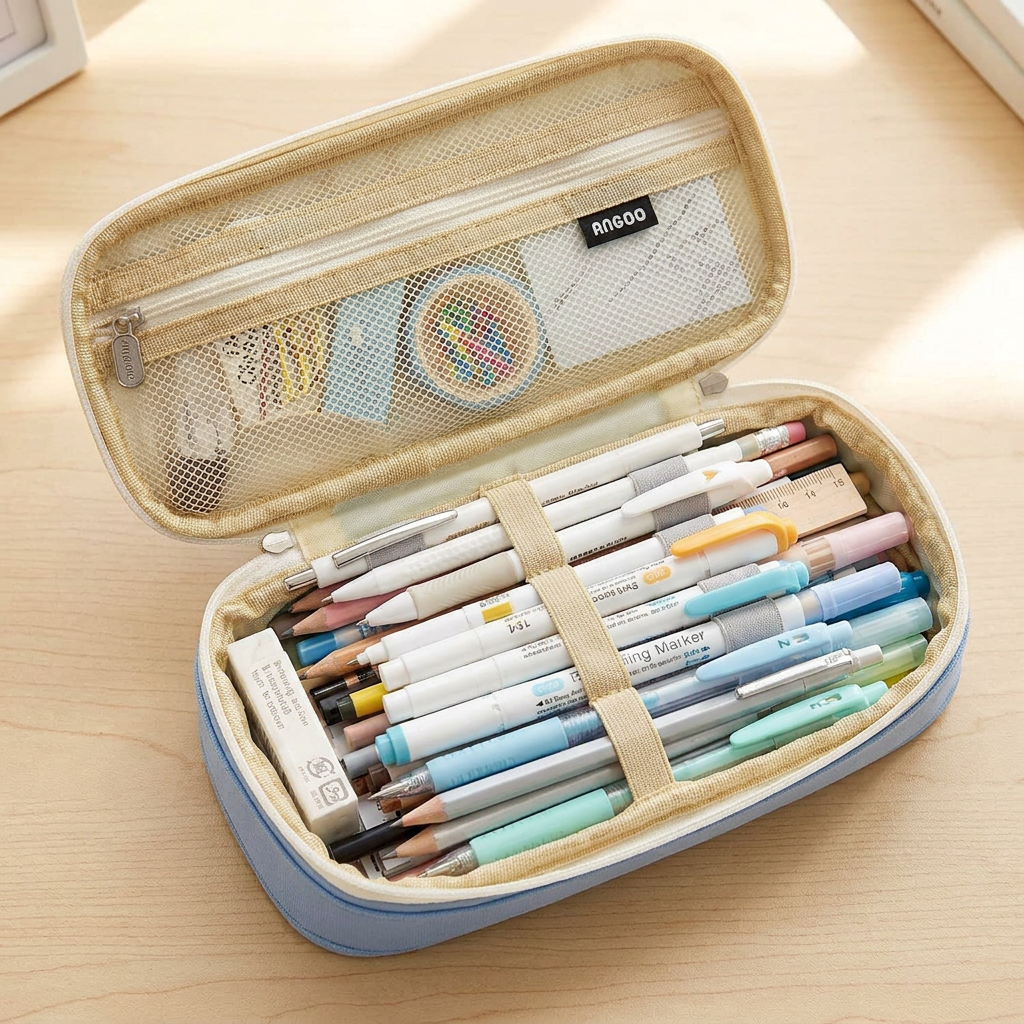
Once a pencil case crosses the "it holds everything" threshold, usability stops being about total volume and becomes about access friction. The practical test is what happens when the daily kit sits around 15–30 writing tools plus small items. At that point, even a wide-opening zippered pencil case can behave in two very different ways: either it becomes a quick-grab organizer, or it turns into a soft pile where the same three pens always end up on top.
The EASTHILL Big Capacity Pencil Pen Case is positioned as a big pouch rather than a strict compartment organizer, so the internal logic depends on how the load is layered. A stable kit can work smoothly if the "long items" and "small items" do not compete for the same space. When everything shares one cavity, small pieces migrate downward and become the first rummaging trigger.
A workable packing pattern tends to look like this: long tools aligned parallel (pens, pencils, highlighters), then one small cluster that is easy to pinch out (eraser, lead, sharpener). The moment that small cluster is allowed to scatter, access time rises sharply because fingers have to search through tips and clips. That is where some 3-compartment pencil cases feel calmer even if they are not larger; they prevent migration.
For people who keep "pencil case and pencils" as a combined concept—tools plus the small maintenance bits—the weak point is often not space but separation. A single correction tape or metal sharpener can scratch plastic barrels. Spare lead tubes can crack if they become the bottom layer under heavier items. That is not a dealbreaker for a pencil case pouch, but it changes what should be carried loose versus what should be nested inside a small inner sleeve or mini pouch.
- If the kit includes 2–3 highlighters and several gel pens, keeping caps protected matters more than adding more tools; a packed bag can press tips even when the case closes easily.
- If the kit includes a 15 cm ruler, the case needs a straight "spine" area; otherwise the ruler bends the pouch into a banana shape and wastes usable space.
- If the kit includes sticky notes, they should sit above the main layer; buried paper attracts graphite dust and looks worn fast.
This is also where the "pencil case that opens up" trend has a real advantage: tray-like openings reduce the need to dig. A big pouch can compete, but only when the opening holds shape and the inside does not become one deep well. If the user’s desk space is tight, a pouch that opens wide but stays compact in footprint is often easier to live with than a case that spreads into a full tray.
Materials, zippers, and the stress cycle: What tends to fail after 4–12 weeks of daily use
Daily use creates a predictable stress cycle for any pencil case: open, grab, close, compress in a bag, repeat. Over roughly 4–12 weeks, weak points show up not as catastrophic failures but as small annoyances—zip resistance, seam wave, fabric fuzzing, and a shape that no longer sits neatly.
With big capacity pencil cases, the zipper sees two extra stresses. First, sideways tension when the pouch is full and the slider is pulled at an angle. Second, "compression closing," where the user presses the case down to make the zipper meet. That pattern slowly deforms the zipper tape and can make the slider feel gritty. Graphite dust and eraser crumbs accelerate that wear by acting like fine abrasive particles.
Material choice matters less in an abstract way and more in how it behaves when dirty. A fabric pencil case pouch that looks clean on day one can become visually noisy from micro-stains: ink dots, highlighter haze, and dark rub marks from bag interiors. Light colors show this faster. That does not necessarily reduce function, but it changes how often cleaning becomes part of ownership—especially for students who place the pouch directly on shared desks.
Seams are the other long-term variable. A pencil case is often lifted by one end, swung into a backpack, or pulled out by a corner. That creates repeated shear force near the zipper line. If stitching is minimal or the zipper tape is not well anchored, the first sign is often a slight "step" in alignment near the end stop. Once that happens, the slider can start catching, and users tend to pull harder, which accelerates the problem.
One practical way to reduce stress without changing the kit is to keep a small buffer of space—enough that the case closes without needing a palm press. When the zipper is treated as a closure rather than a clamp, the daily cycle stays smoother. It is a small habit, but it is the difference between a pencil case that feels the same after a month and one that becomes a daily irritation.
School rules, exam visibility, and "clear pencil case" requirements (ASTM D4236 as a real packaging signal)

Some buying decisions are not about comfort or durability. They are about compliance. Many schools and exam settings require visible supplies, which is why the clear pencil case remains common. A fabric pouch—no matter how practical—can be rejected in those situations. That constraint is easy to underestimate because it is not a product flaw; it is a context mismatch.
Beyond visibility rules, there is a quieter compliance signal that sometimes appears on stationery and art materials: ASTM D4236. It is a U.S. labeling standard used for art materials to indicate they have been evaluated for chronic hazards and labeled appropriately. It does not certify a pencil case itself, but it can matter indirectly when the case is used to store markers, paints, or art supplies that do carry such labeling. If the kit includes art materials, it is worth checking whether the items stored inside are properly labeled and capped, because leaks and odors are not only mess issues—they can become classroom policy issues.
For more on ASTM D4236 labeling and what it means, see the Art & Creative Materials Institute (ACMI) overview: ASTM D4236.
For younger students, another rule-driven reality is what teachers tolerate on desks. Character designs (for example, a hello kitty pencil case) may be allowed, discouraged, or restricted depending on the school culture. That affects whether a "special pencil case" is a fun motivator or an attention magnet that gets left in a locker. The functional implication is simple: if the case is likely to be confiscated or discouraged, durability and organization features become irrelevant. The safest choice in strict environments is often the most neutral-looking case for pencils, even if it is less expressive.
Finally, some exam boards and classrooms limit not just visibility but also what can be brought: fewer tools, fewer colors, fewer extras. In those contexts, a big capacity pencil case can quietly encourage over-packing. The case is still usable, but the "always ready" mindset can conflict with the rules of the room.
Positioning this EASTHILL pencil case against common alternatives (with a quick scenario table)
Within the big-capacity segment, the real comparison is not "good versus bad," but which design reduces the specific friction a student or office user feels every week. The EASTHILL Big Capacity Pencil Pen Case sits in the high-capacity pouch lane; nearby alternatives in the same shopping space often add compartments, handles, or a slightly different opening geometry.
To keep the comparison grounded, it helps to map options to situations rather than to labels like "best."
| Situation | Option | Why It Tends to Work |
|---|---|---|
| Large daily kit, wants one simple cavity and fast packing | EASTHILL Big Capacity Pencil Pen Case | Big pouch format suits a stable loadout; fewer internal parts to snag long tools |
| Hates rummaging; wants separation to stop small items migrating | CICIMELON Large Capacity Pencil Case 3 Compartment Pouch Pen Bag | Multi-compartment layout enforces zones, which can keep accessories findable |
| Needs a carry-friendly grip between classes or rooms | Sooez Original High Capacity Pencil Case | Handle/loop concept supports hand-carry without squeezing the pouch body |
| Wants some separation but not a full organizer feel | Della Gao Large Pencil Case, Big Capacity Pencil Pouch With 2 Compartments | Two compartments can split "tools" from "small parts" without over-dividing |
When the deciding factor is "compartments versus one space," it is worth being honest about personal behavior. People who naturally reset their pencil cases weekly can keep a big pouch tidy. People who never empty it tend to do better with a 2- or 3-compartment structure because it makes clutter harder to hide.
For readers who want to verify the exact listing details and current seller terms for one of the closest format alternatives, the product page for the CICIMELON Large Capacity Pencil Case 3 Compartment Pouch Pen Bag can be checked here: see the CICIMELON Large Capacity Pencil Case 3 Compartment Pouch Pen Bag on Amazon.
For a second point of reference in the "some separation, not too complex" lane, the Della Gao Large Pencil Case, Big Capacity Pencil Pouch With 2 Compartments listing is here: see the Della Gao Large Pencil Case, Big Capacity Pencil Pouch With 2 Compartments on Amazon.
And for users who care about hand-carry comfort in crowded hallways—where a bag and pencil case are carried separately more often—the Sooez Original High Capacity Pencil Case page is here: see the Sooez Original High Capacity Pencil Case on Amazon.
What this pencil case gets right (and what it will never fix)
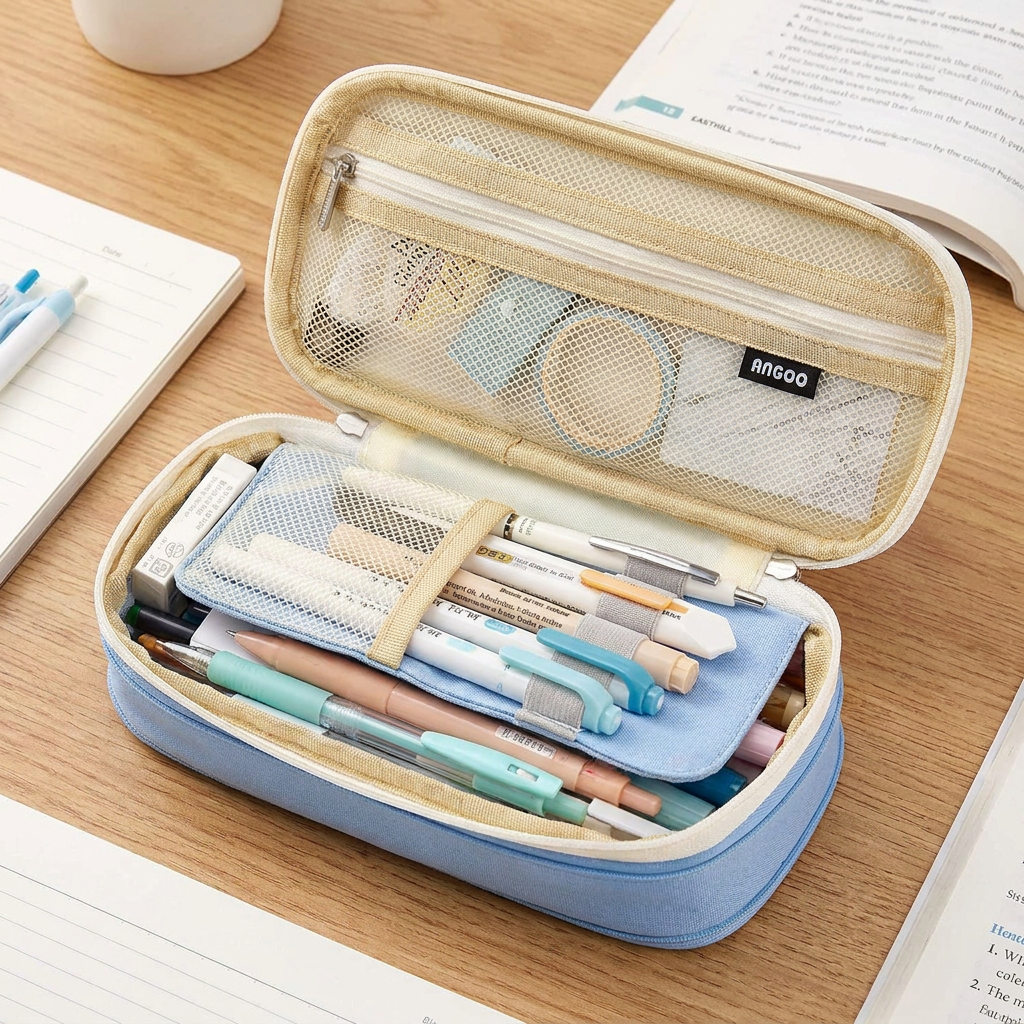
The EASTHILL Big Capacity Pencil Pen Case is convincing when the goal is simple: one roomy pencil case that can swallow a full daily kit without turning into a fragile, fussy organizer. The best part is the "one container" mentality—it reduces loose items and makes it easier to grab everything in one move before class or a meeting. For many students, that alone removes a daily annoyance more effectively than any clever layout.
The limit is just as clear. A big pencil case does not create order; it only holds what is put into it. If the habit is to toss in random extras, receipts, candy wrappers, and week-old sticky notes, the pouch becomes a portable junk drawer. In that situation, a 2- or 3-zone layout (or even two smaller pencil cases) tends to feel calmer than any single large cavity, even if the total capacity is lower.
There is also a mismatch that shows up fast in real life: a large pencil pouch can be "too successful." It invites overpacking. Once the kit crosses into duplicates and "just in case" items, the bag becomes heavier, bulkier, and slower. The practical expectation to set is this: a big zippered pencil case is a storage solution first and an access solution second. It can be quick, but only when the contents stay stable.
When it works – and when it doesn’t
This pencil case fits a consistent, tool-heavy routine: students who carry roughly 15–30 writing tools and small accessories daily, or office users who keep a predictable set for notes, planning, and quick fixes. It also suits anyone who prefers one larger pouch over juggling a bag and pencil case as separate "must not forget" items.
It will feel wrong for minimalist carry, tight desk space, or strict exam visibility rules that push toward a clear pencil case. It is also a poor match for anyone who changes supplies constantly; a large case for pencils becomes clutter faster than a smaller one, and the size turns into pure bulk when the contents are not disciplined.
Buying it online without getting burned: Seller, returns, and review-reading shortcuts
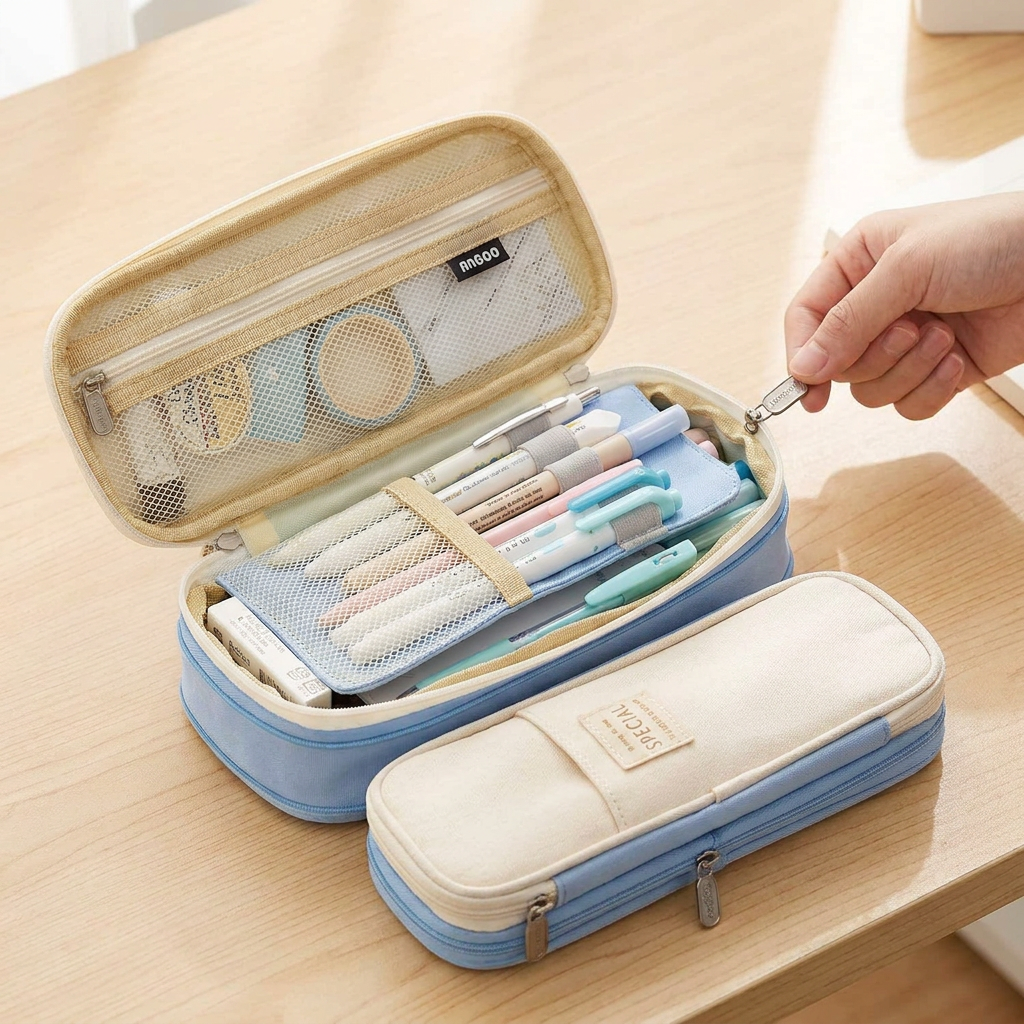
Big pencil cases are common, and listings often look interchangeable. The safest way to avoid disappointment is to treat the product page as a checklist, not as a gallery. Confirm the basics that affect daily friction: the closure type (a standard zipper versus unusual pulls), how wide the opening looks when unzipped, and whether the photos show the inside clearly enough to understand how "deep" the main cavity is.
Marketplace reviews can still help, but only if they are read with a filter. The most useful reviews are the ones that describe a stable loadout and a time window, even if the tone is neutral. The least useful are "it’s cute" or "holds a lot" with no context. When scanning, look for specifics that match real failure modes for a pencil case pouch:
- Mentions of the zipper pulling off-track, sticking, or separating under a full load (that is different from "I overfilled it and forced it").
- Notes about seams near the zipper line after being carried by one end between classes.
- Comments about staining and whether marks wipe off or sink into the fabric, especially for lighter colors.
Returns and exchanges matter more than people think for a pencil case because small annoyances are hard to tolerate daily. A pouch that "almost" fits a backpack pocket becomes a weekly irritation. Before committing, it is worth checking the current return window and who is responsible for shipping in a return scenario. That is not about being pessimistic; it is about avoiding sunk-cost frustration over a low-cost item used every day.
For readers who want to verify the exact listing, current seller terms, and available color options, the product page can be checked here: see the EASTHILL Big Capacity Pencil Pen Case Office College School Large Storage High Capacity Bag Pouch Holder Box Organizer Light Blue on Amazon.
Frequently asked questions about pencil cases
How many pens can a pencil case like this hold without becoming annoying?
A practical comfort range is often around 15–30 tools, depending on how many bulky items are mixed in. Past that point, the issue is rarely "space" and more often how long it takes to find the one item needed quickly.
Is a 3-compartment pencil case better than a single big pencil pouch?
It is better for people who dislike rummaging or who carry many small pieces that migrate to the bottom. A single-cavity pencil case can feel faster to pack and simpler to live with when the kit is stable and not full of tiny accessories.
What is the fastest way to keep a zippered pencil case from feeling gritty?
Keeping graphite dust and eraser crumbs out is the biggest lever. Emptying and shaking it out weekly prevents fine debris from building up in the zipper area and making the closure feel rough over time.
Do schools actually require a clear pencil case?
Some do, especially for exams or specific classrooms, and the rule can vary by teacher or testing setting. When that requirement exists, it overrides every other feature, because a fabric case for pencils may simply be rejected.
Verdict and the one scenario where this pencil case makes the most sense
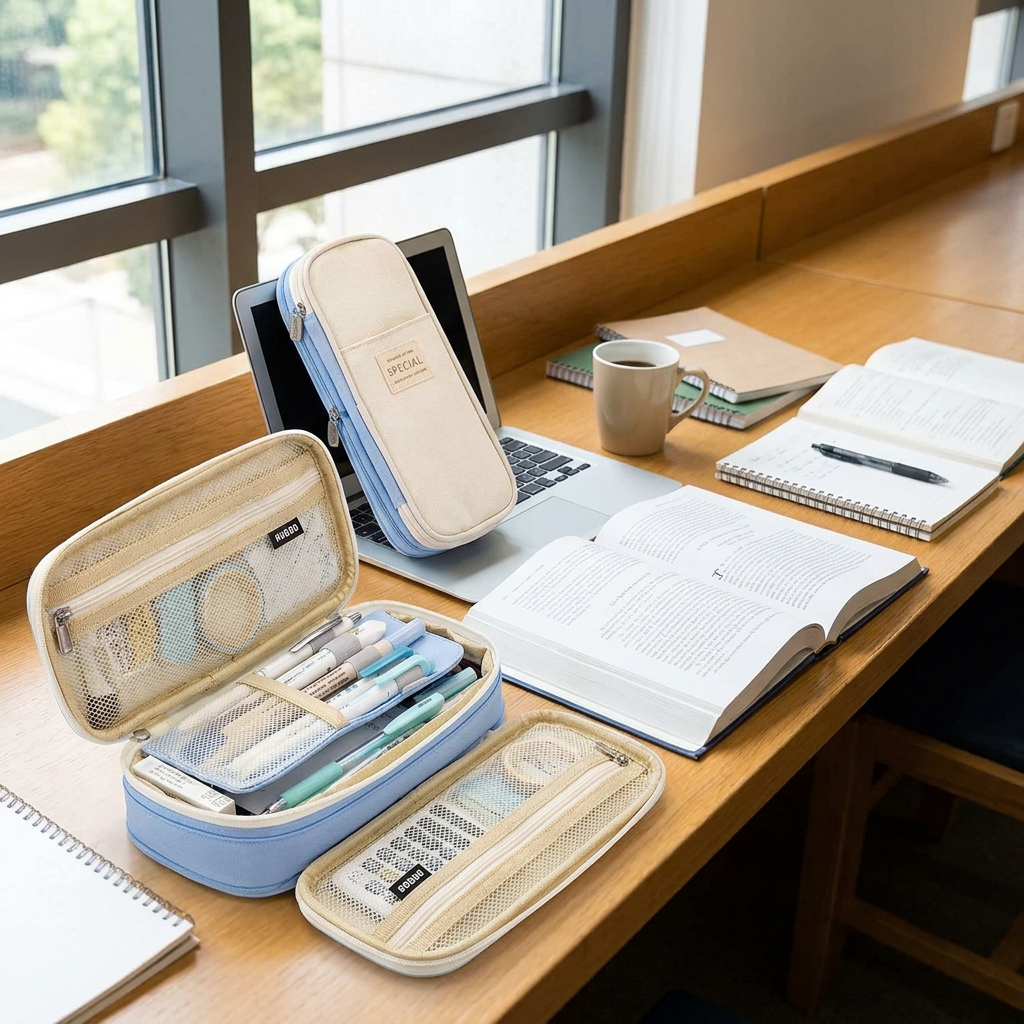
The EASTHILL Big Capacity Pencil Pen Case is a strong pick for people who genuinely need a large pencil case and will keep a consistent kit. It is not a "magic organizer," but it is a practical container that supports a busy routine without demanding attention.
The cleanest use-case is a student carrying a full set—multiple pens, several highlighters, mechanical pencils, and a handful of small accessories—who wants one dependable pencil case that can be grabbed in a single motion and dropped into a backpack without careful packing.